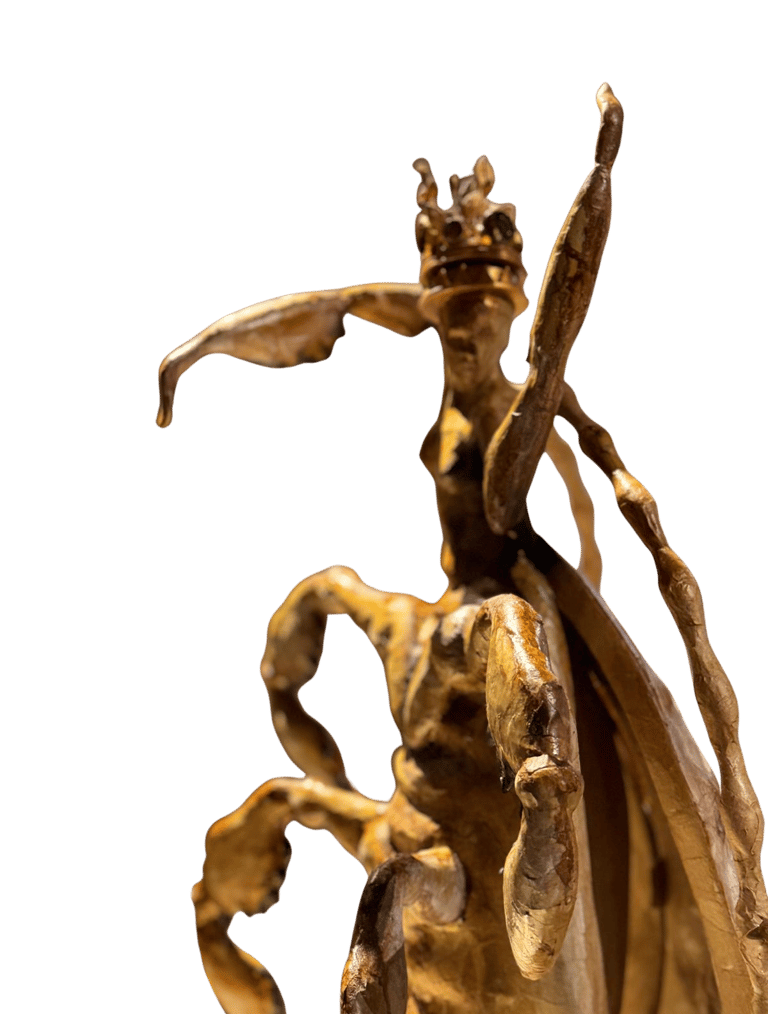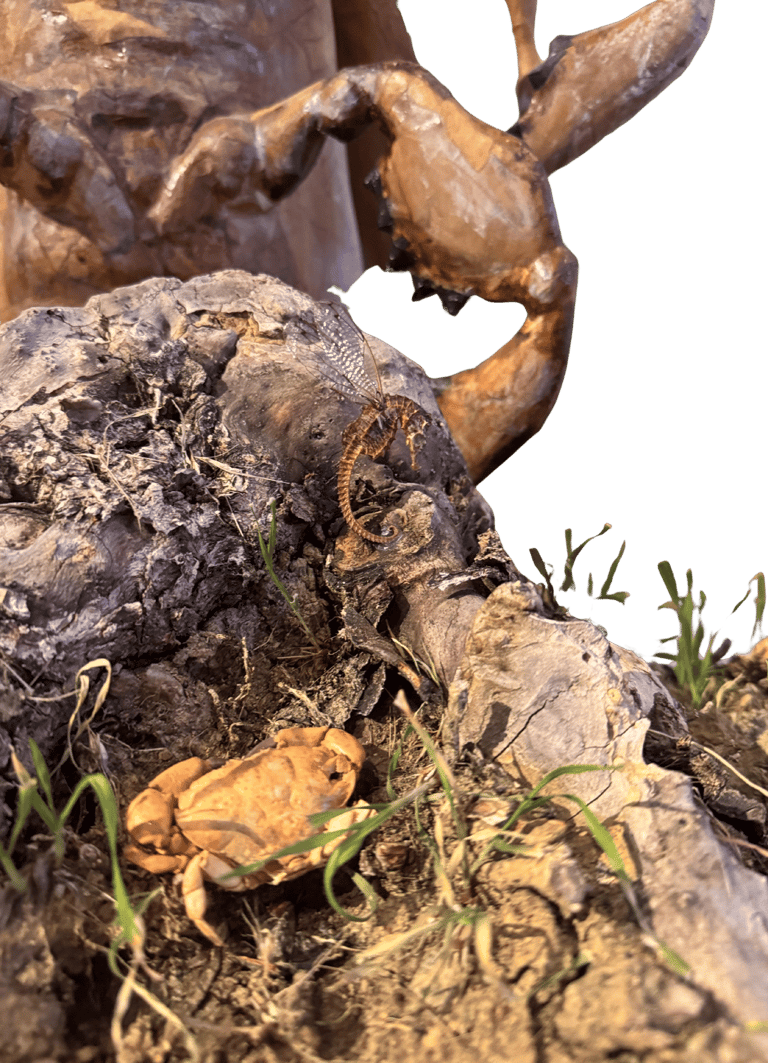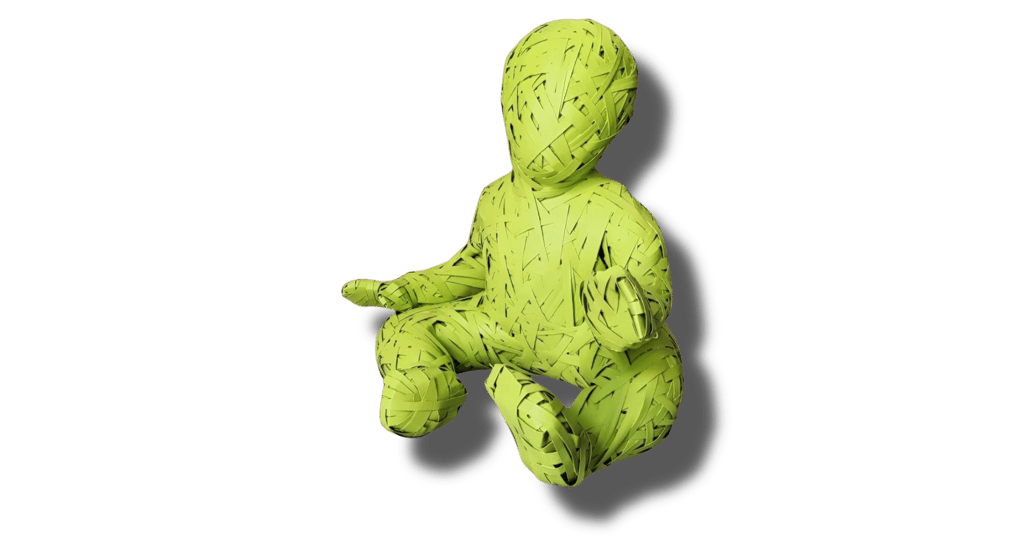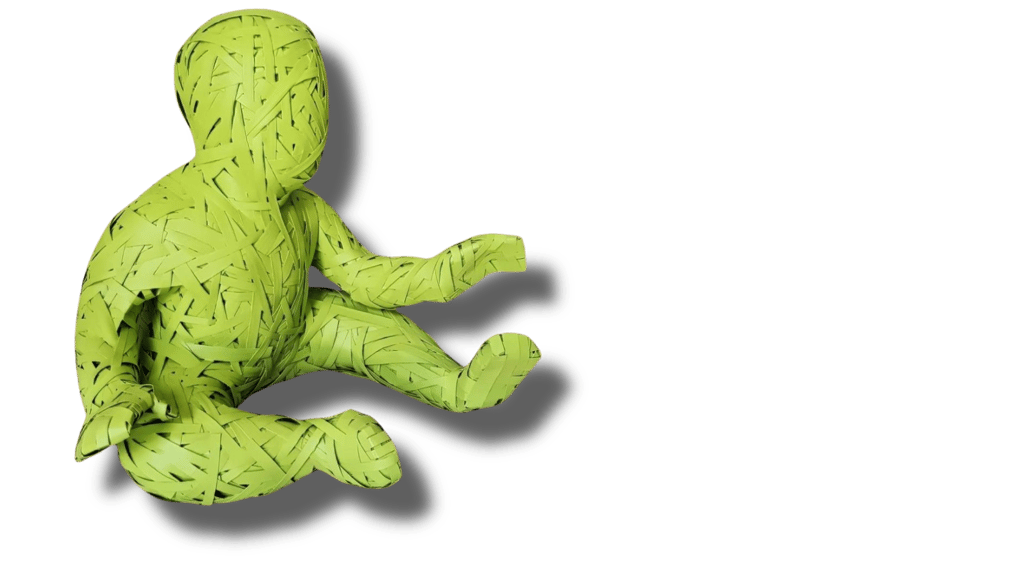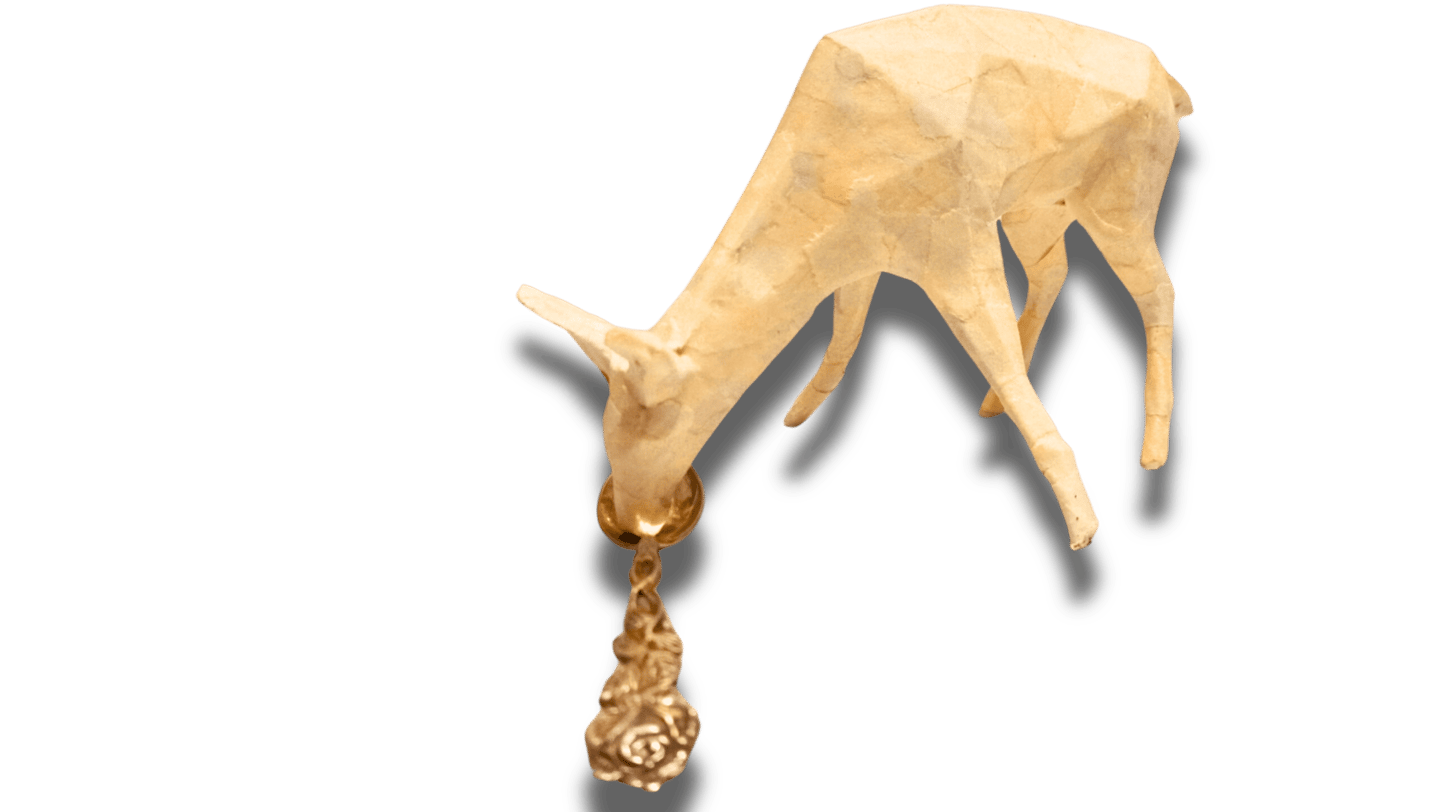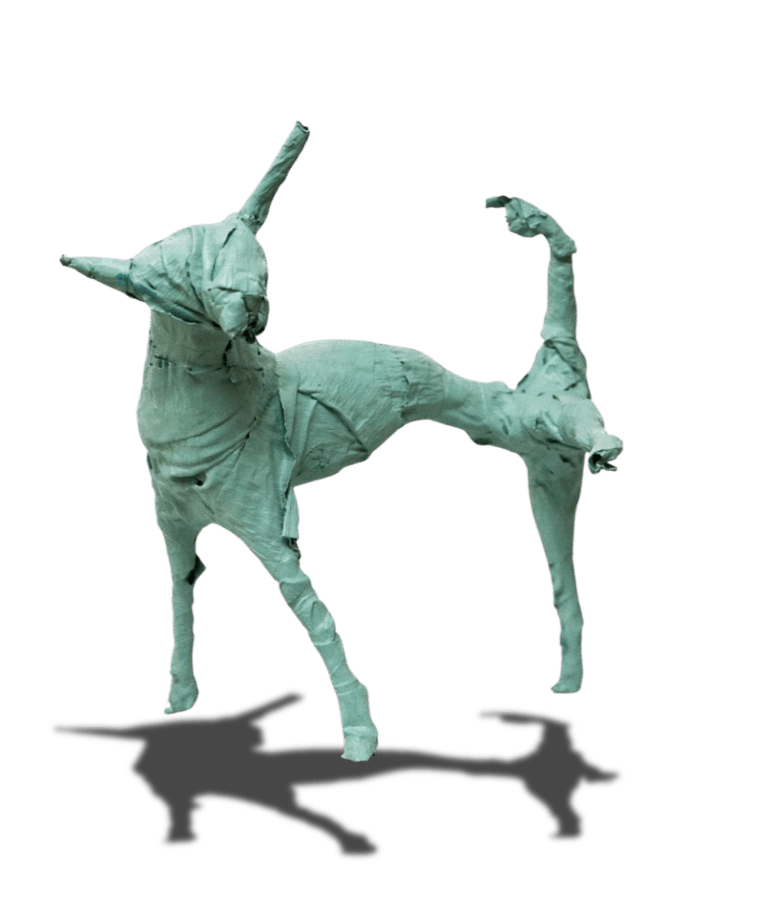
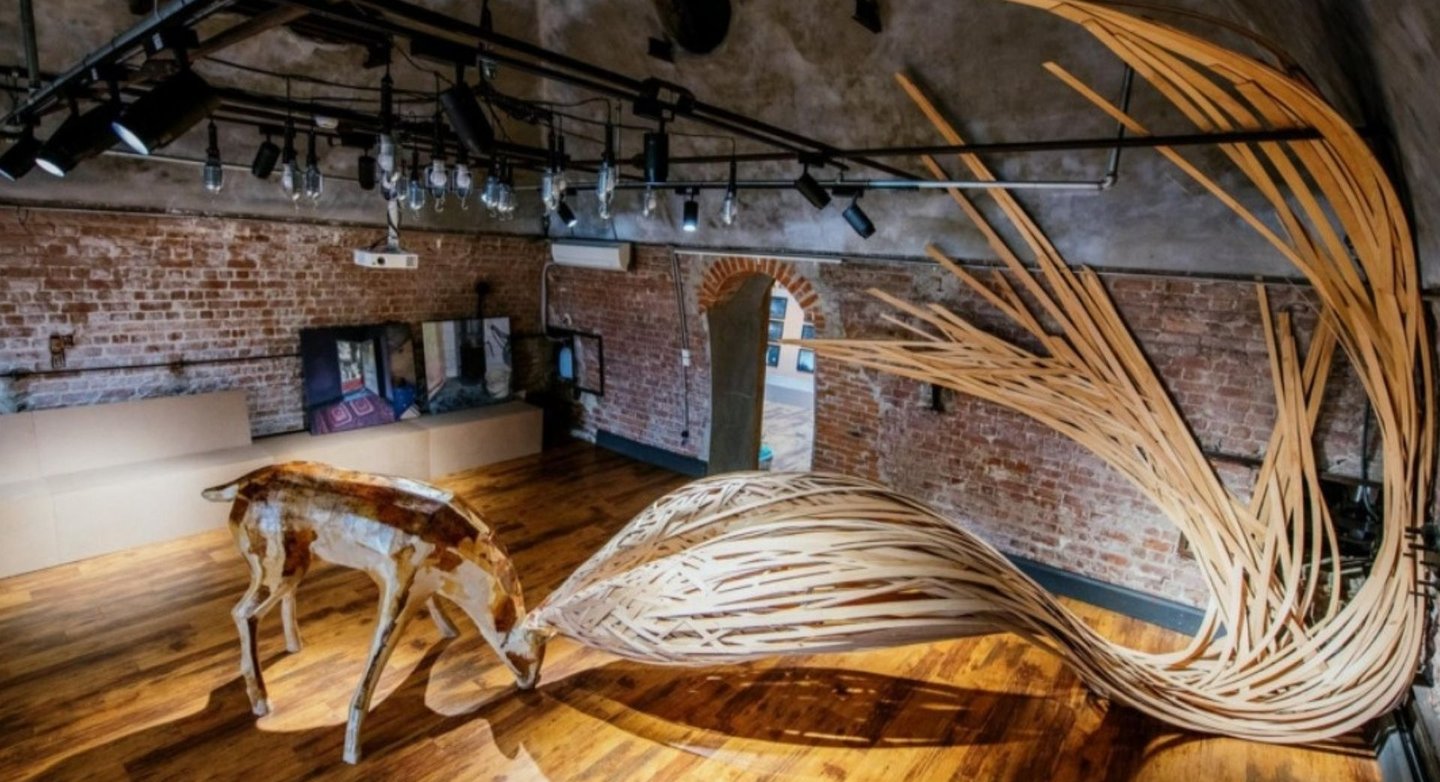
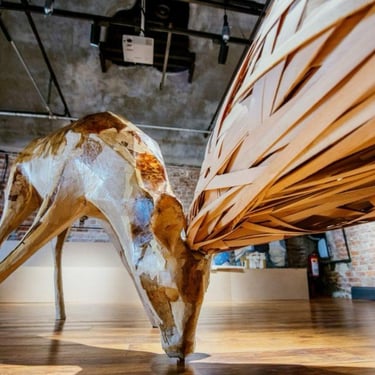
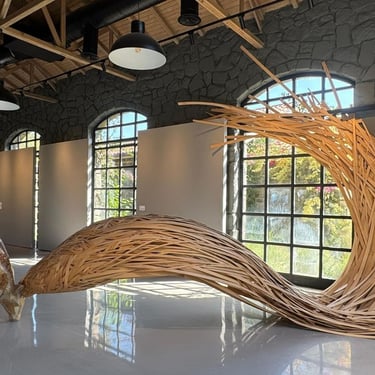
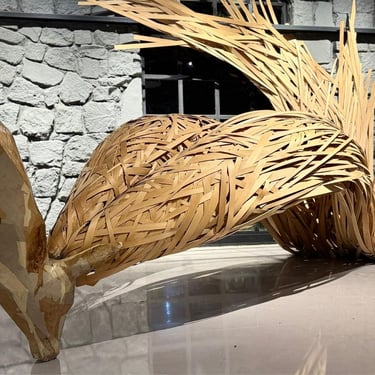
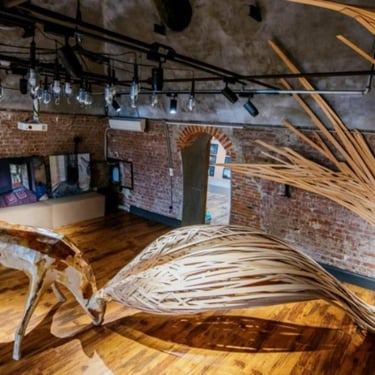
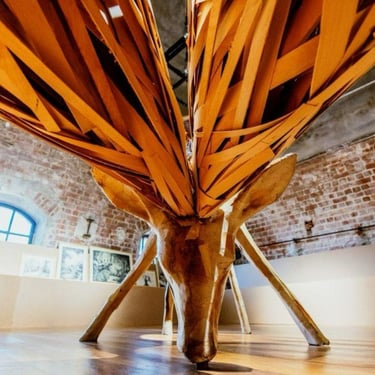
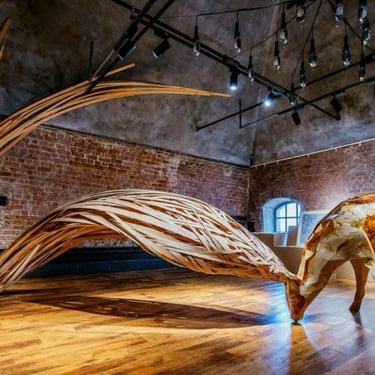
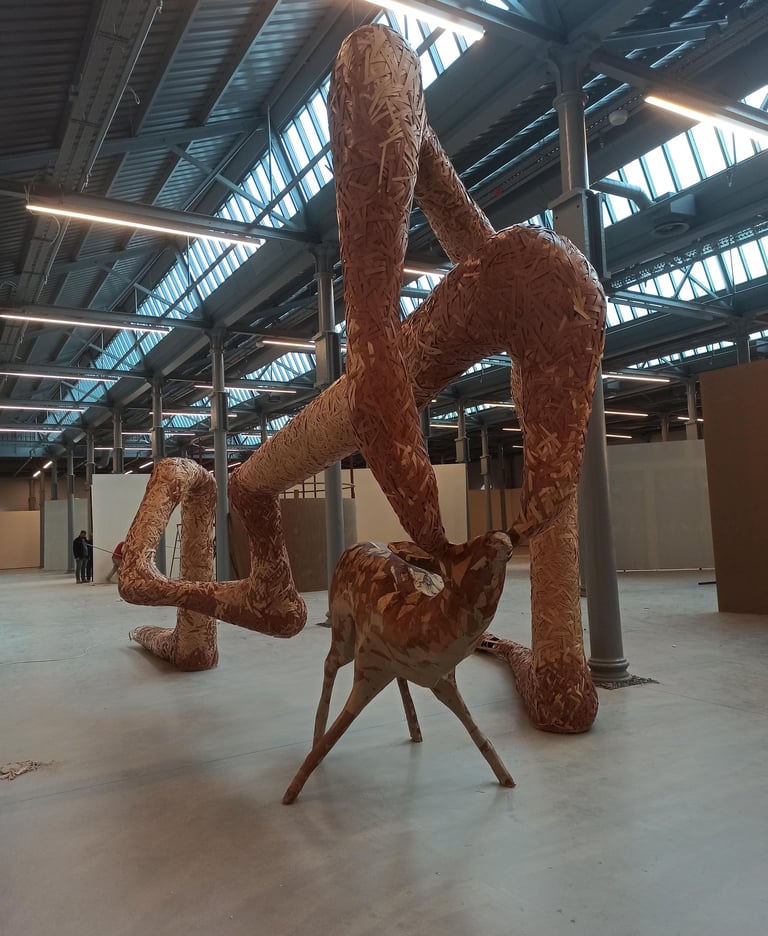
Using paper and wood together, Invasion is a sculptural installation of a deer whose antlers extend, branch out, and occupy the entire volume of the space it inhabits. The work proposes that, within a nature dominated by human sovereignty, other living beings can sustain their existence only by imitating the “invasive human.” In this context, the installation constructs a scene that reveals the dysfunctionality of a mutated creature.
INVASION | 2020 | PAPER AND WOOD | INSTALLATION
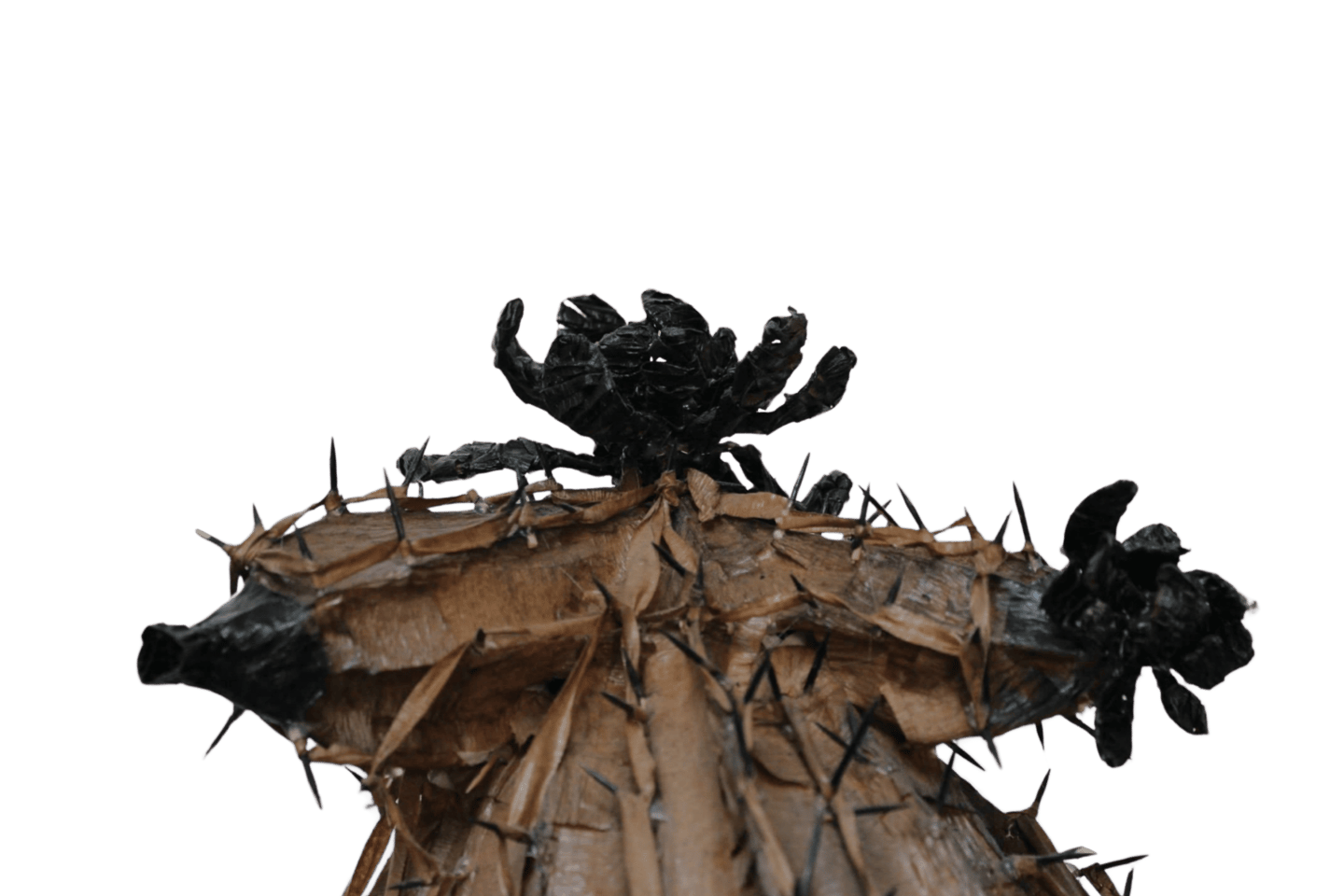
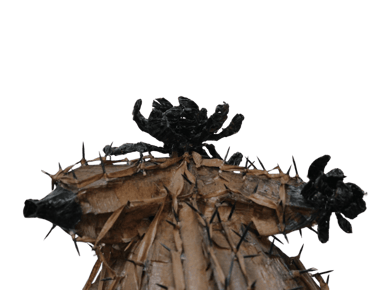
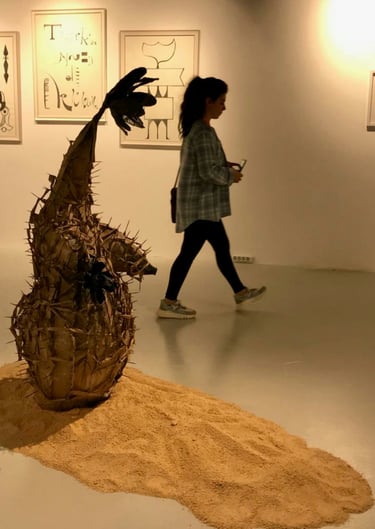
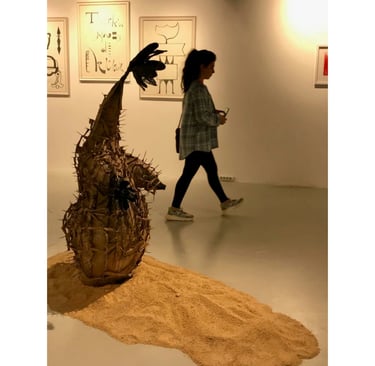
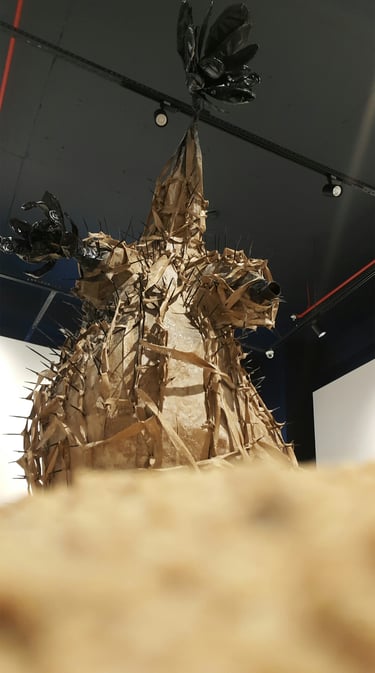
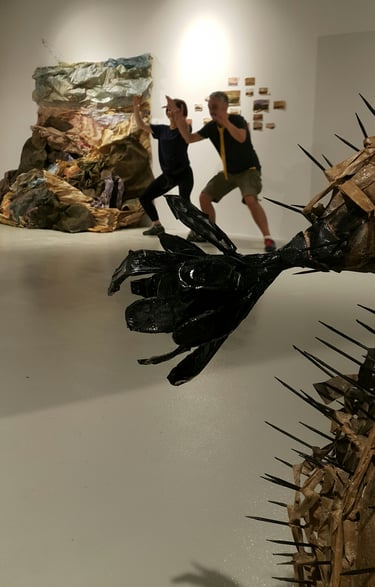
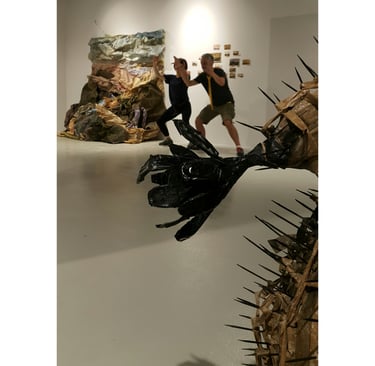
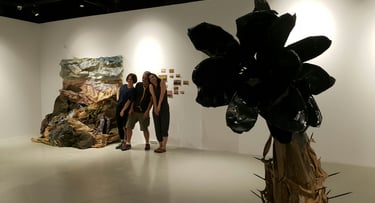
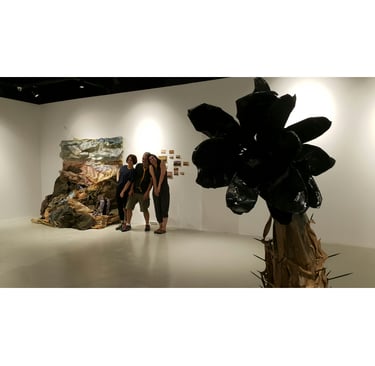
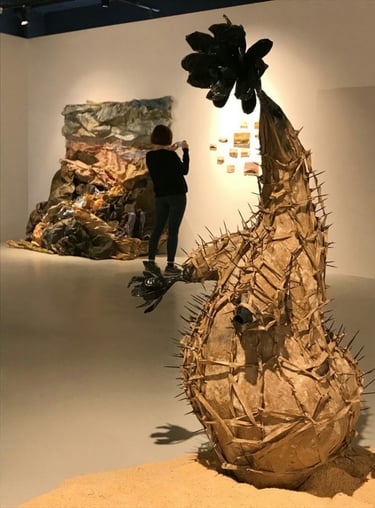
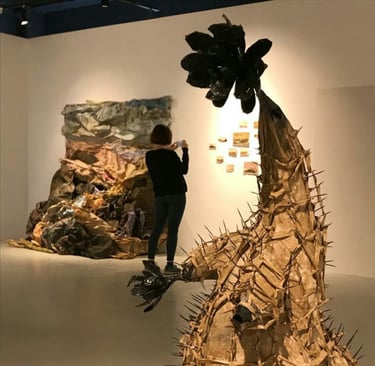
CACTUS WOMEN | PAPER | 2019 | 120*80*70 CM
Cactus Women represents female bodies that carry survival not as a defensive reflex, but as a form of existential knowledge. These figures appear firm, distant, and thorned from the outside; yet this hardness is not a denial of fragility, but a conscious act of protecting it. Just as a cactus stores water within, these women accumulate pain, memory, and experience in their bodies.
The female figure in the work has learned to adapt like an organism shaped by harsh conditions—learning to endure with little and to keep excess at a distance. The thorns function less as aggression and more as boundaries; they remind us of the responsibility inherent in touch, approach, and contact. These boundaries carry the traces of past wounds while simultaneously embodying a quiet form of healing.
Cactus Women does not romanticize the expectation of resilience imposed on women’s bodies; instead, it renders visible the cost of that resilience. The moment of blooming is rare and unostentatious, yet profoundly intense—because that flower emerges from prolonged waiting, drought, and solitude.
This work approaches the female body not as a passive vessel, but as a living ecosystem in constant negotiation with its environment. Cactus Women makes visible the life hidden beneath hardness, the tenderness embedded in defense, and the quiet dignity of survival
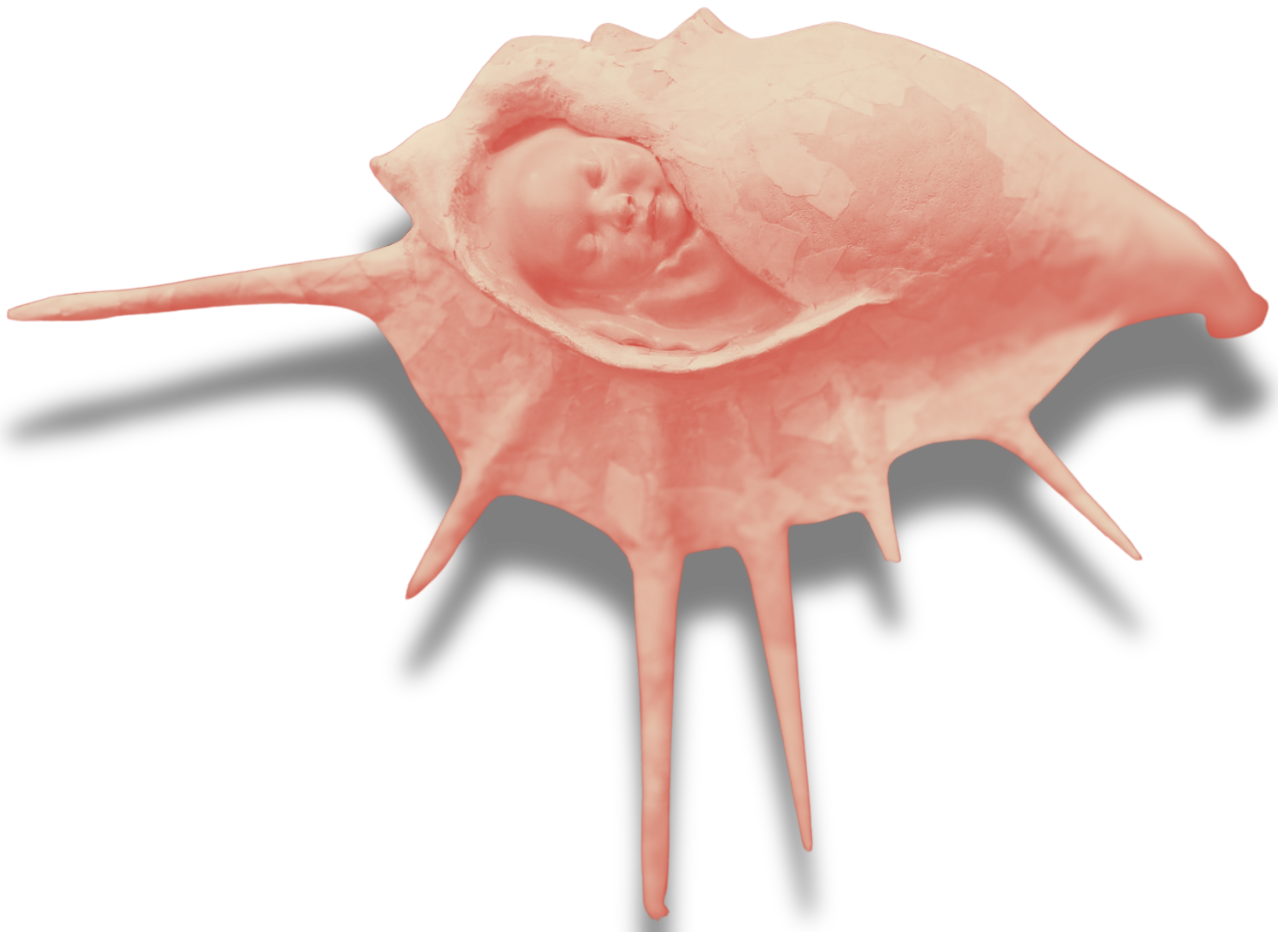
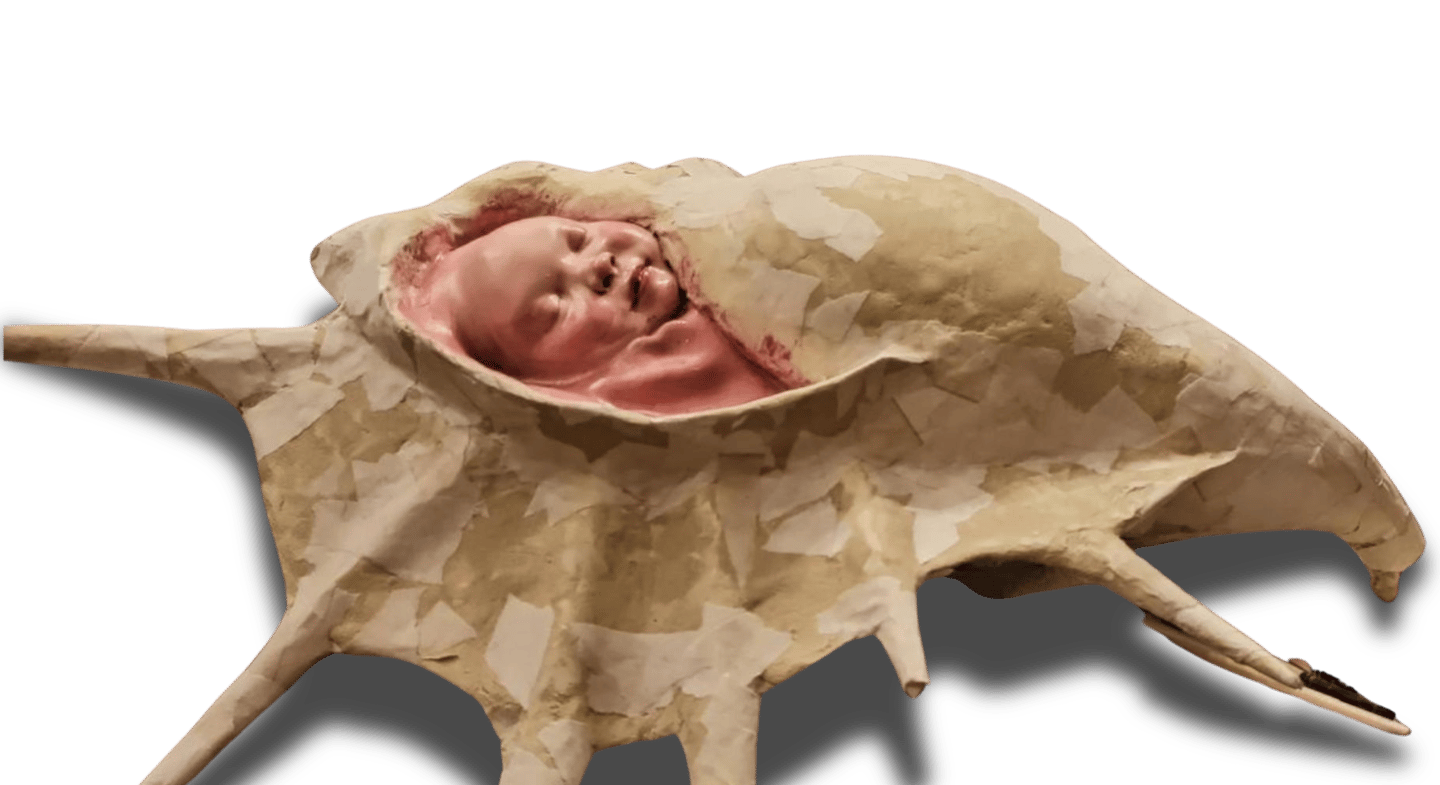
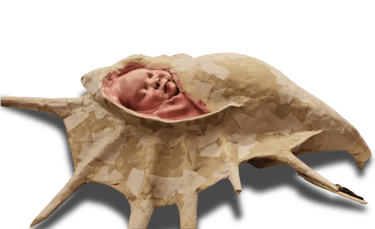
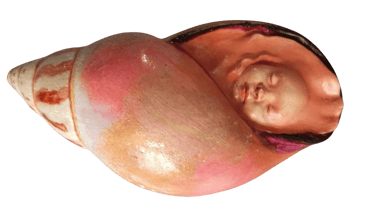
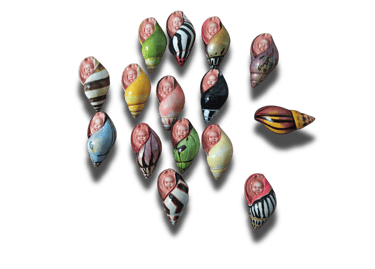
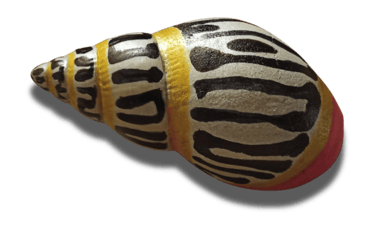
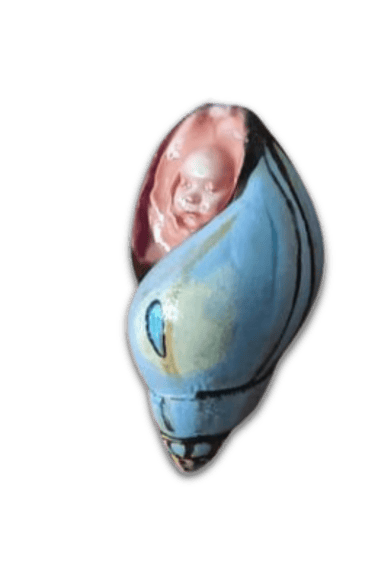
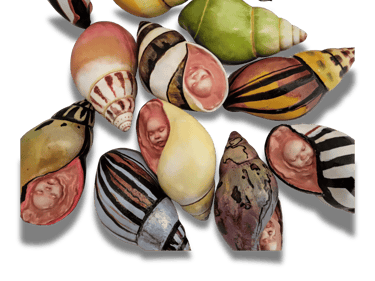
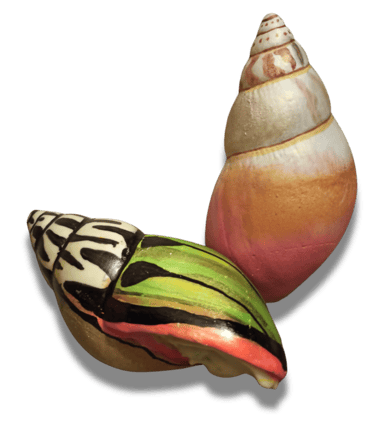
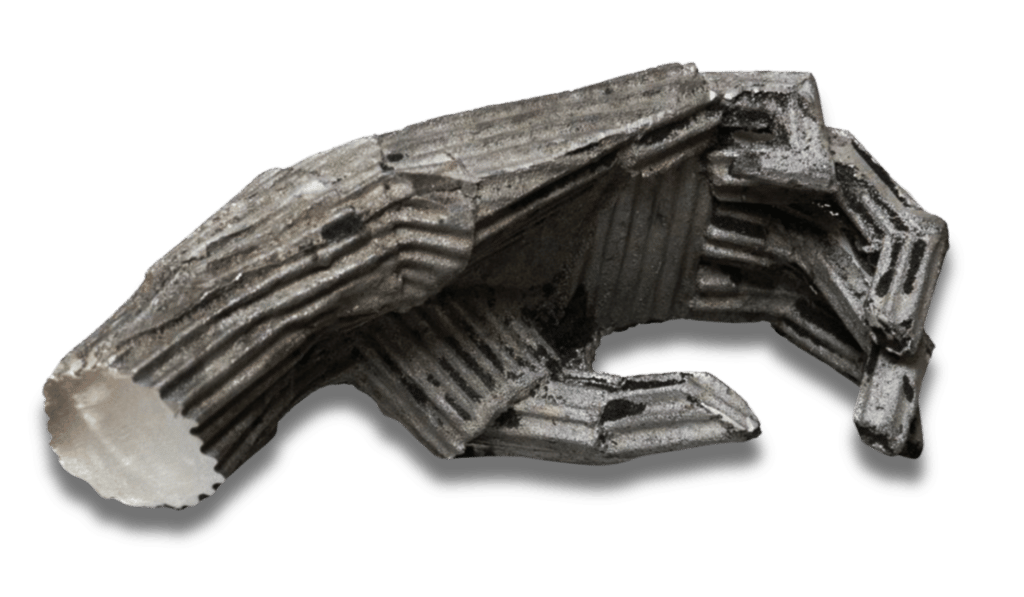
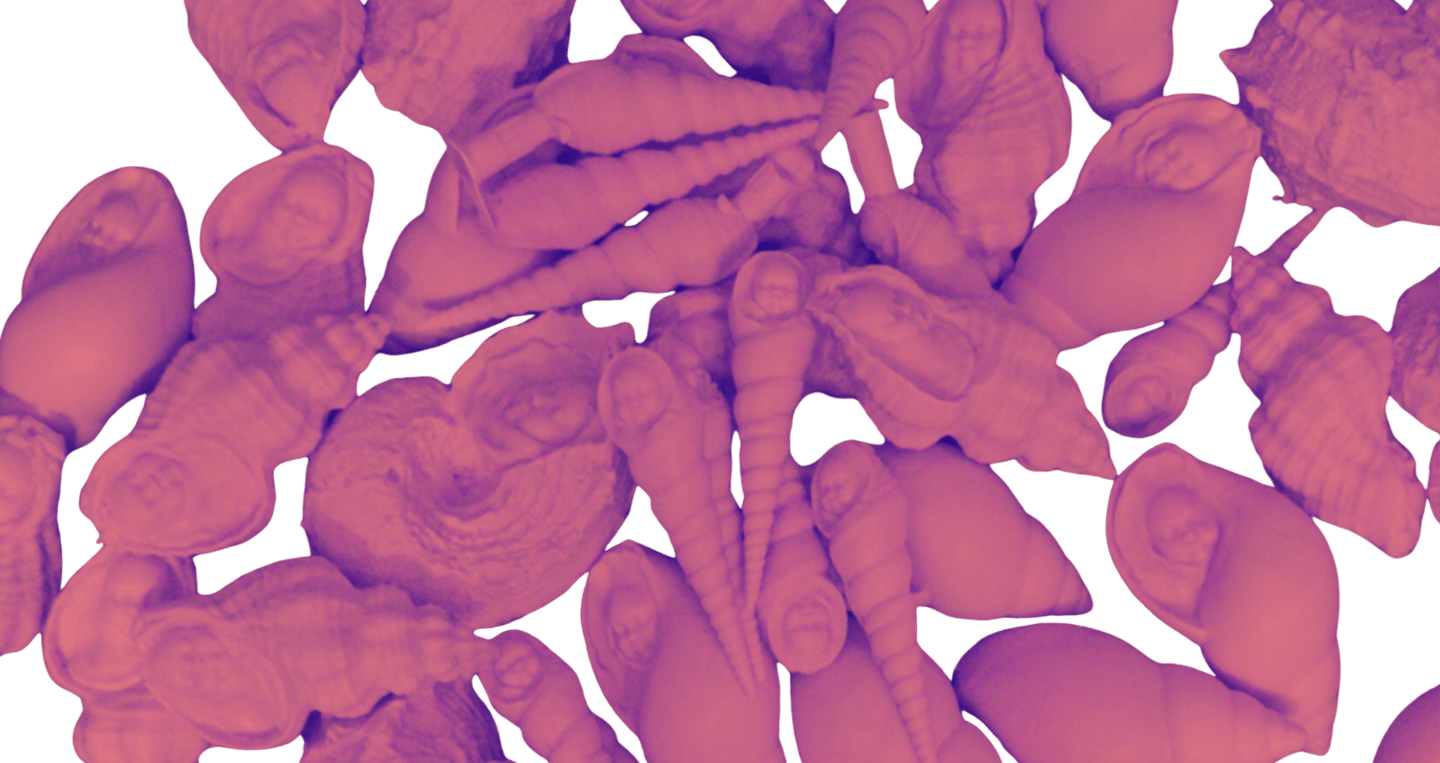
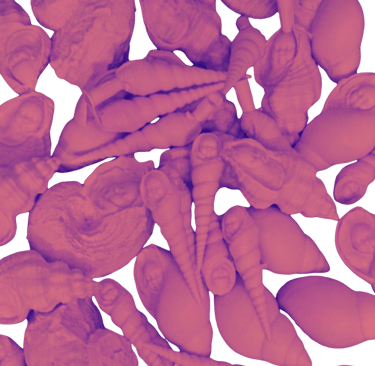
The “Kundak” series materializes the ontological contradiction of the refugee experience: protection and exposure, shelter and displacement intertwine within the same form. The artistic strategy makes visible the tension between the individual body and the nomadic object by placing the human face within a natural shell.
Material and production processes play a critical role. Surfaces at different stages of raw clay — unglazed, semi-fired, and glazed — carry layers of time, witnessing, and fragility; saline textures and localized firing marks transform the works into carriers of both geographical and biographical memory.
Conceptually, the series problematizes the witnessing of borders: while the shell functions as a cradle, it simultaneously becomes a form of shellification that restricts movement. The word “kundak” encapsulates this duality, signifying both the search for shelter and the risk of burning and annihilation. Here, kundak sustains two meanings at once: on the one hand, the warm and protective gesture that swaddles an infant; on the other, the destructive shadow of the act of arson.
The traces left by clay, salt, and fire become memory inscribed on the faces; the shells stand as both shield and boundary for carried lives. What is left to the viewer is to listen to the sea passing through these silent cradles, to the lost breaths, and to the fragility of rebirth.
KUNDAK | CERAMIC | 2025 | 20*12*8 CM
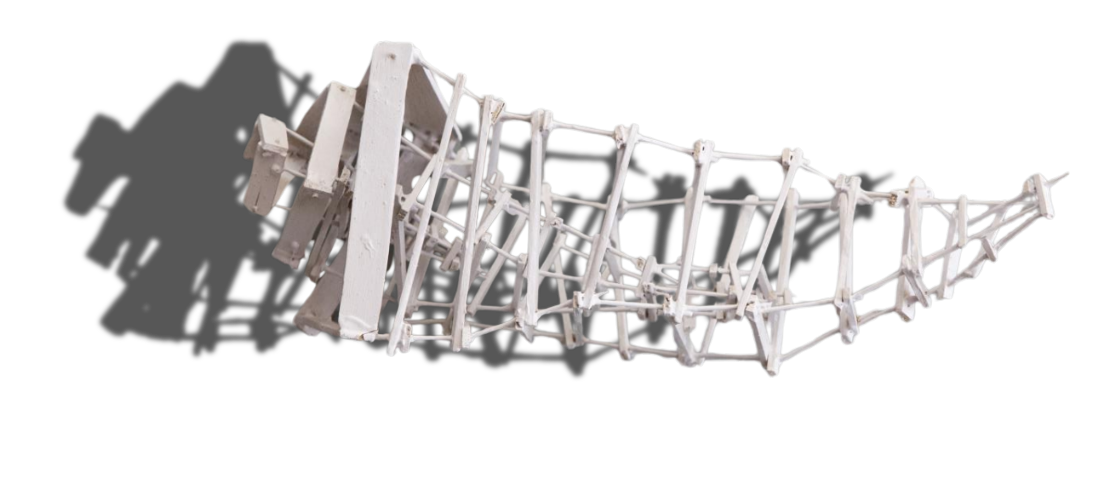
NO NAME | WOOD | 2015 |40* 20*10CM
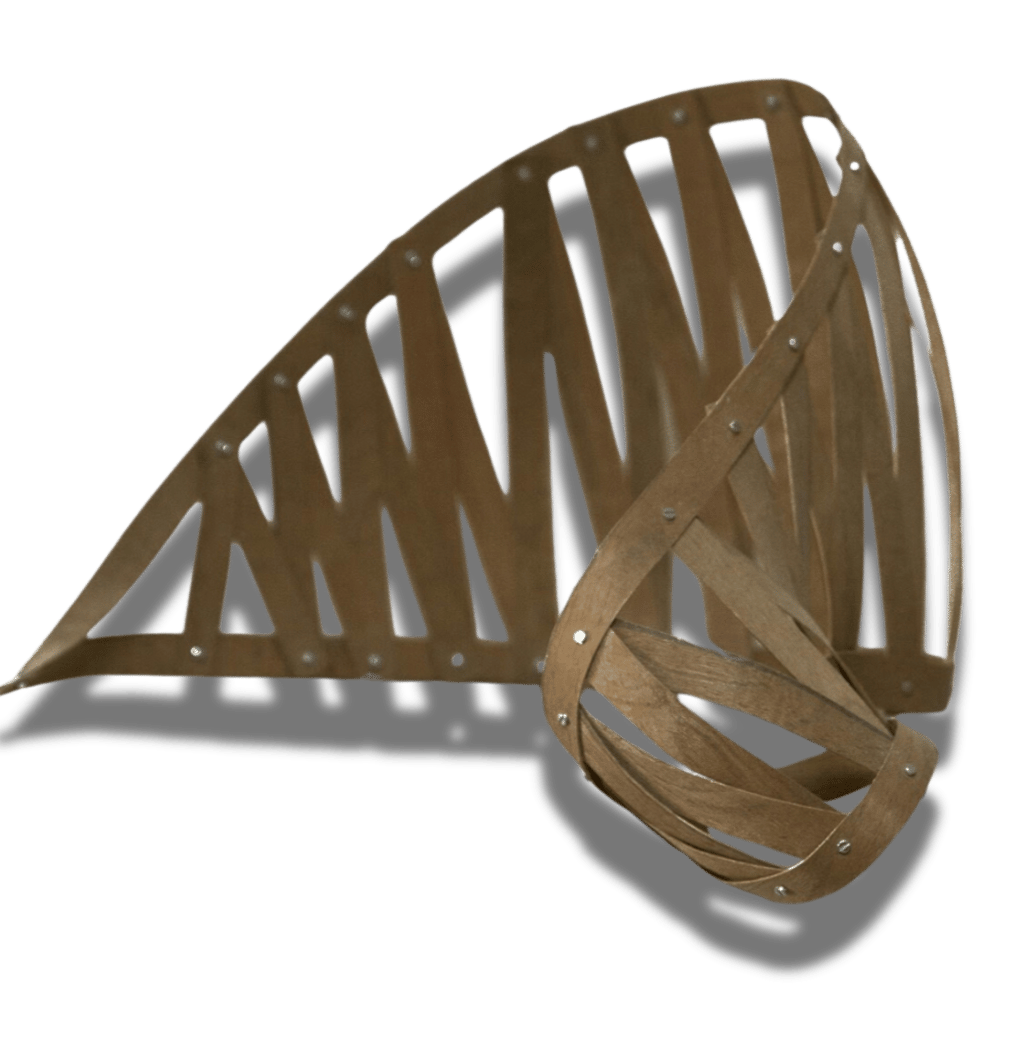
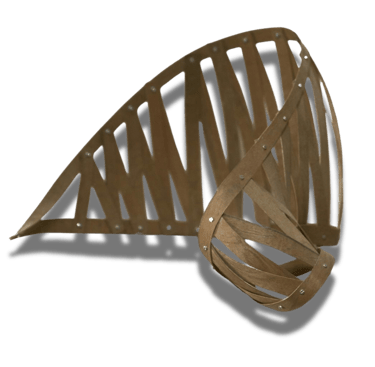
NO NAME |WOOD| 2017 | 50*70*30 CM
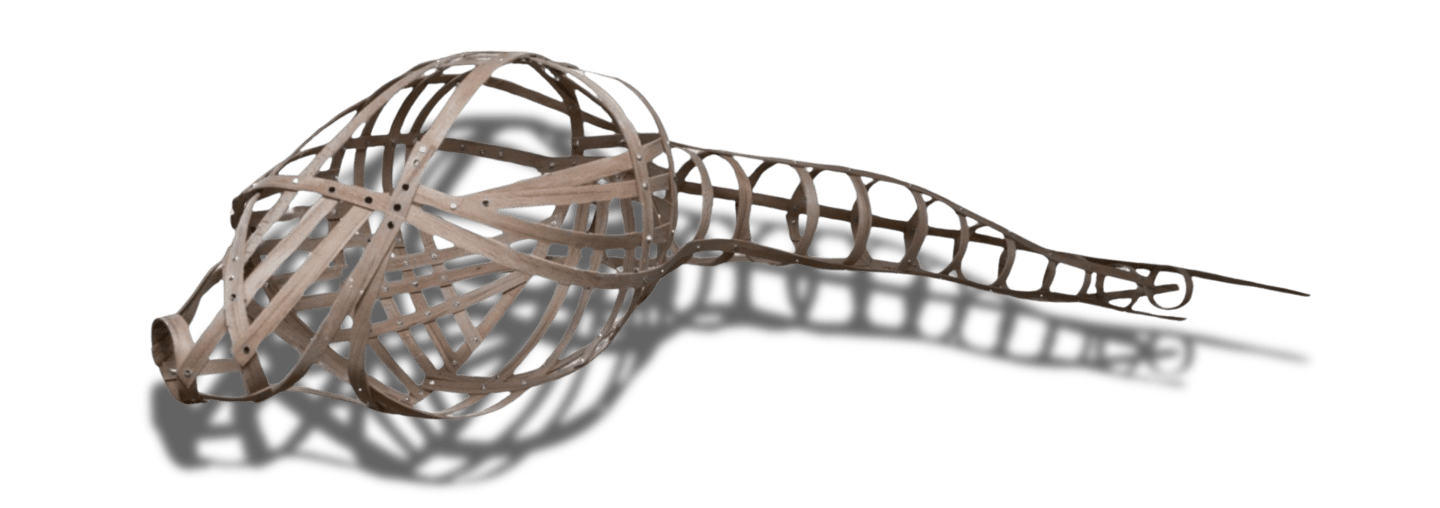
NO NAME| 2017 | WOOD| 150*60*70CM
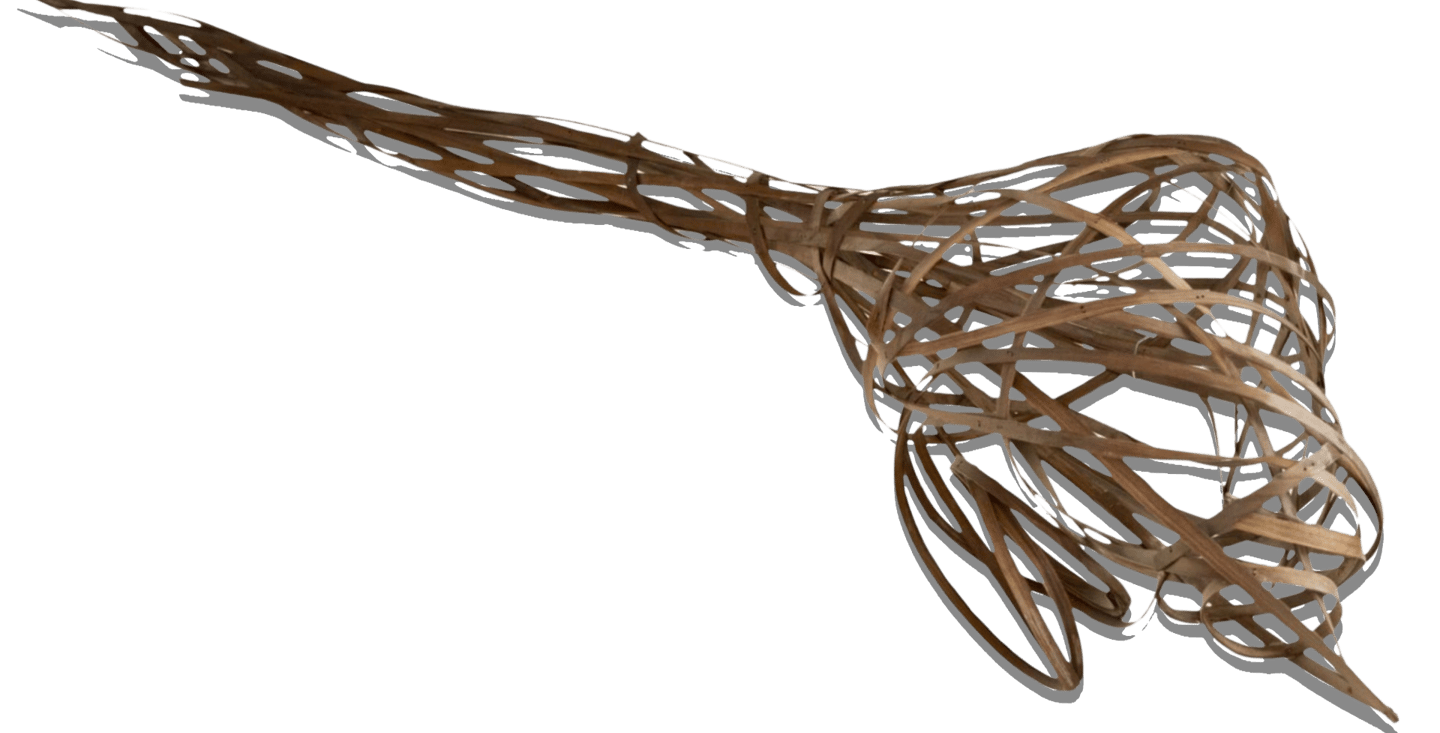
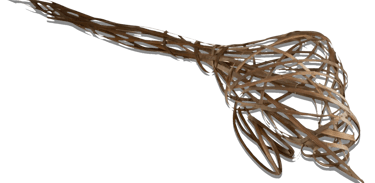
NO NAME |WOOD | 2017|200*90*60CM
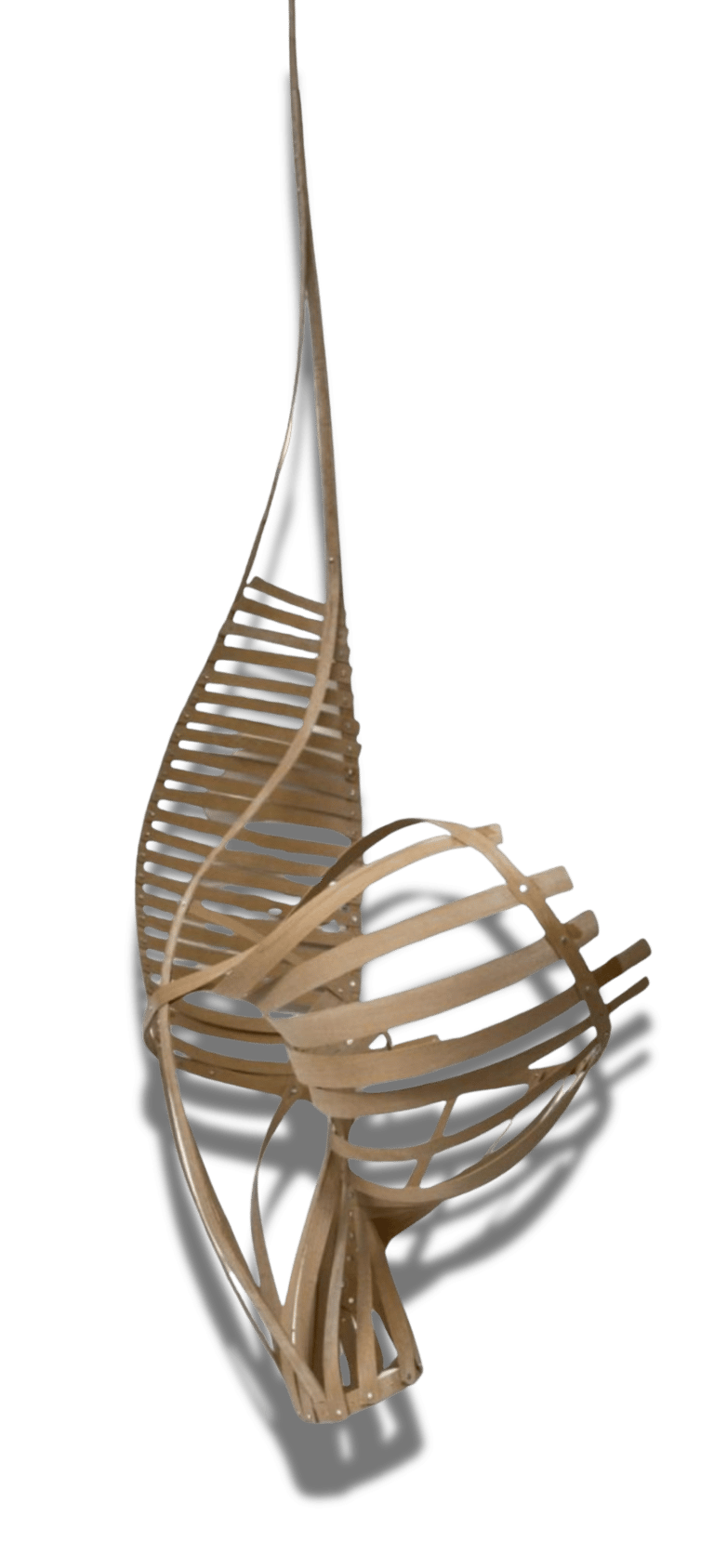
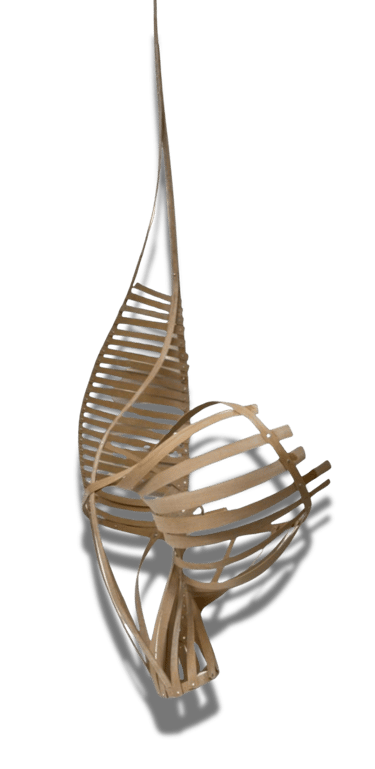
NO NAME | WOOD |2018 |120*50*60CM
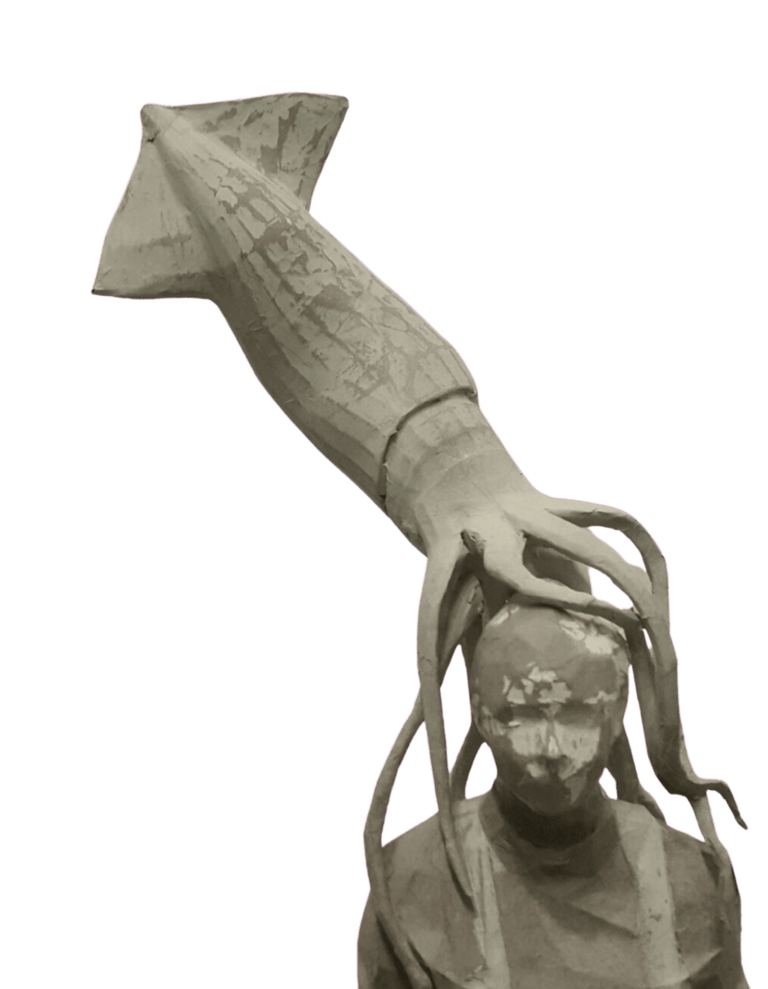
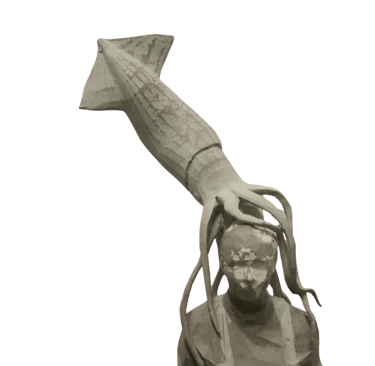
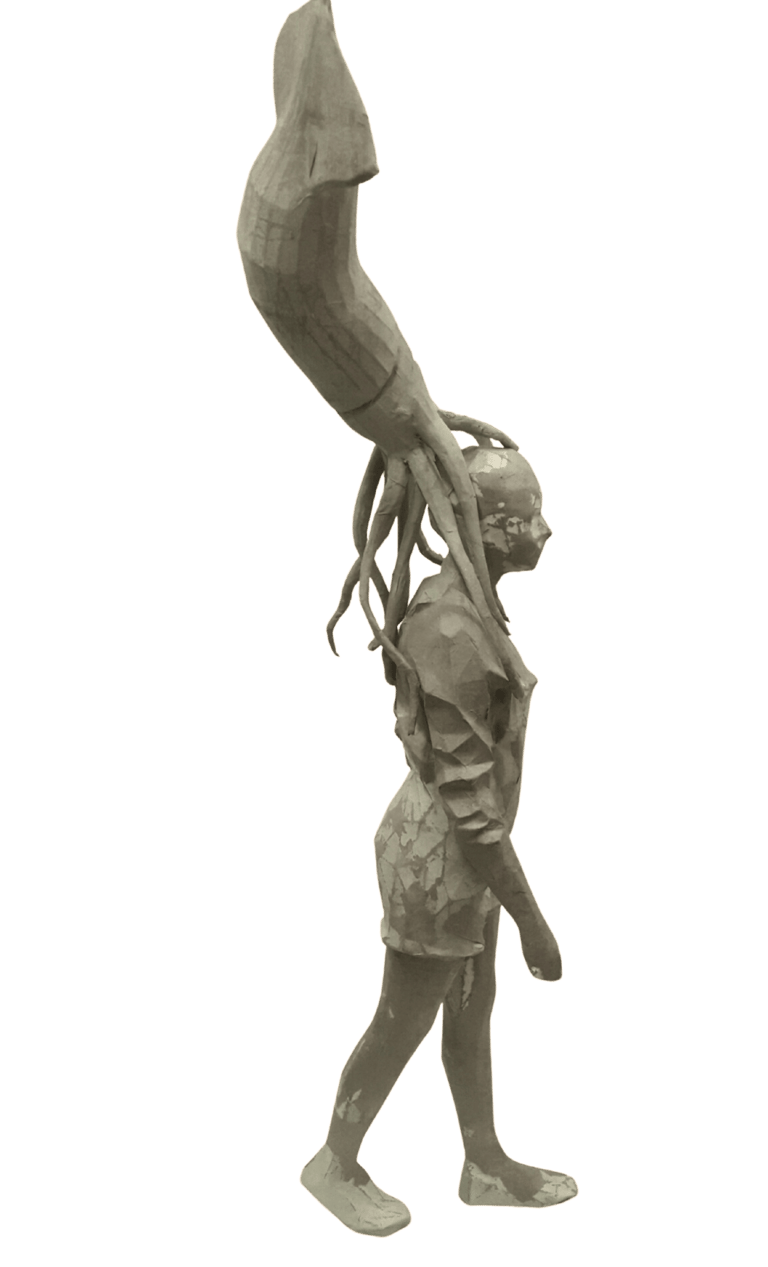
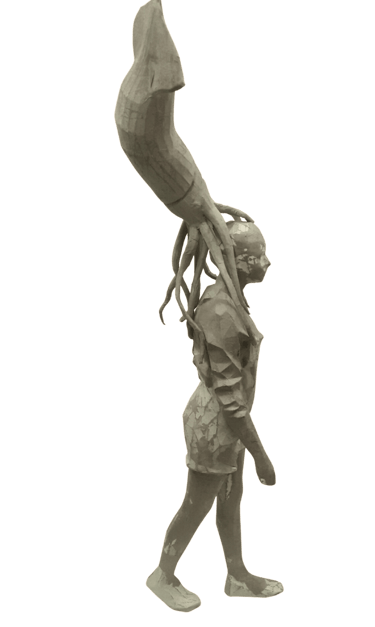
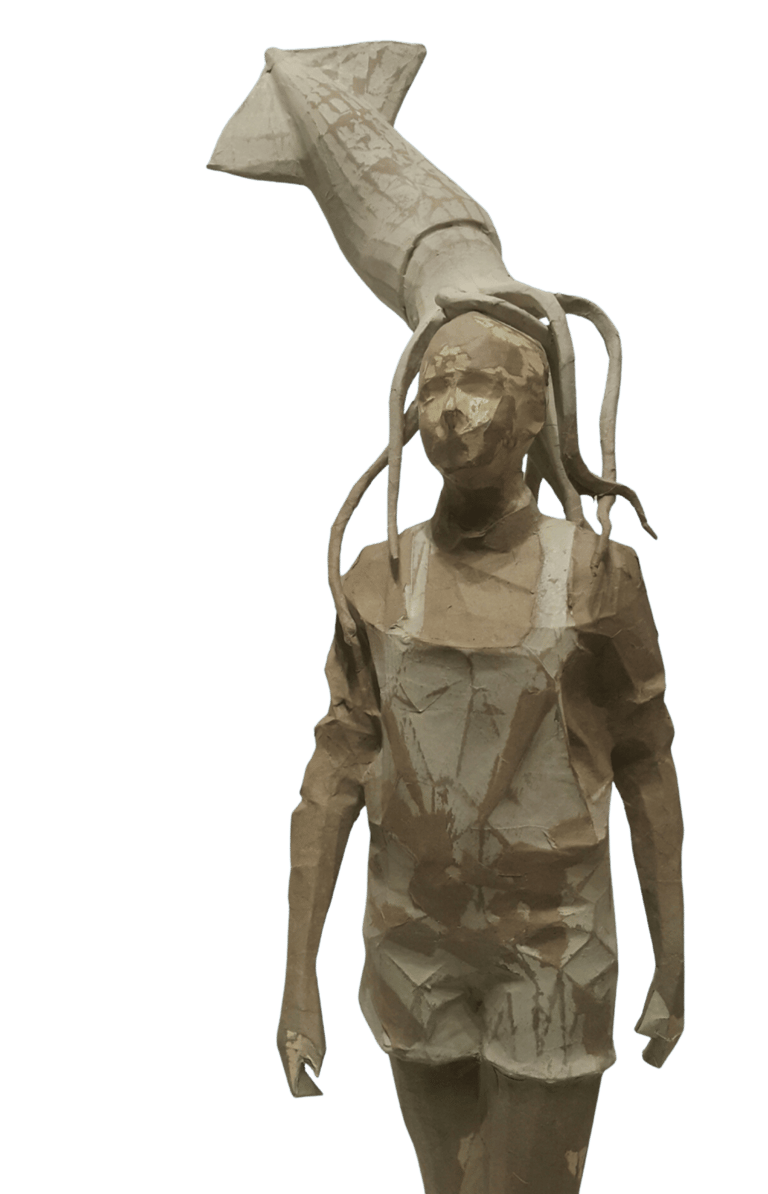
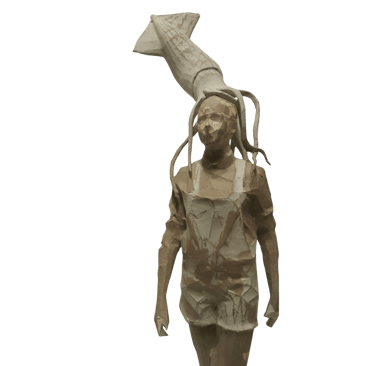
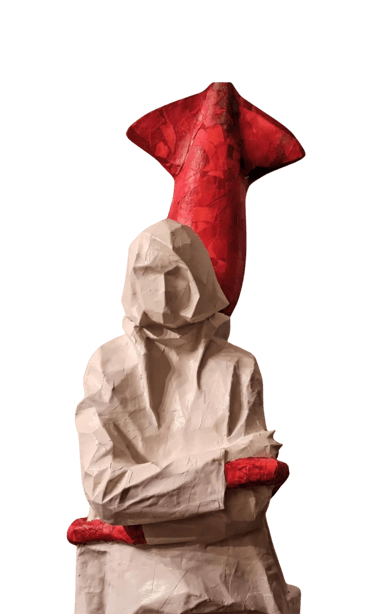
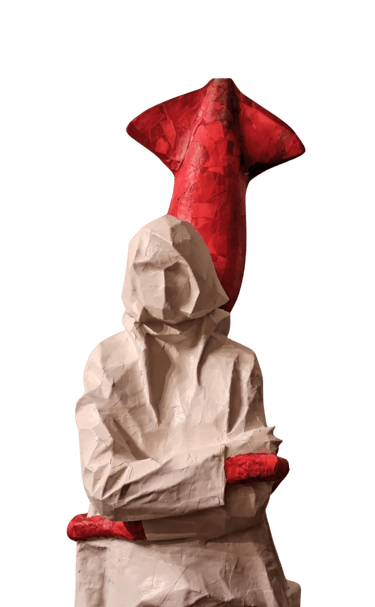
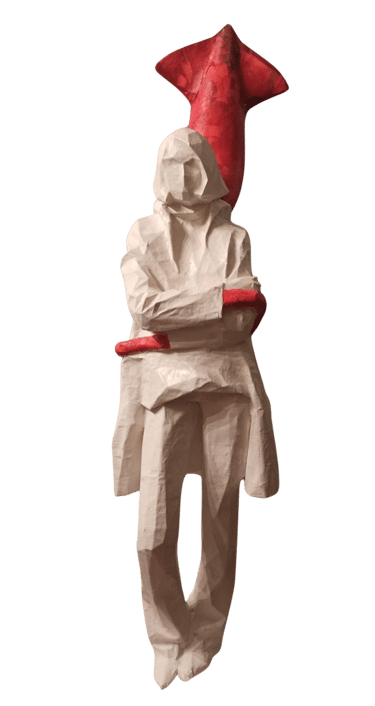
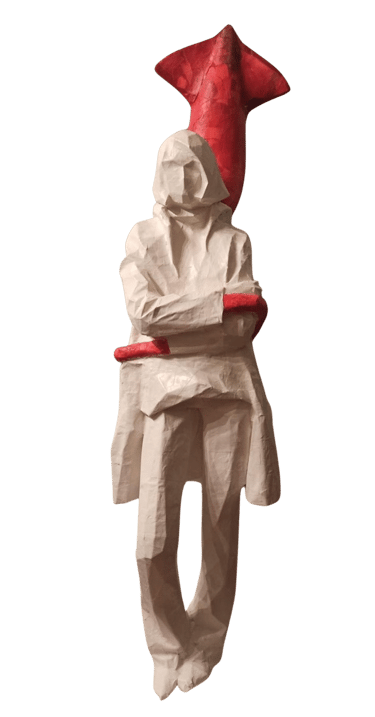
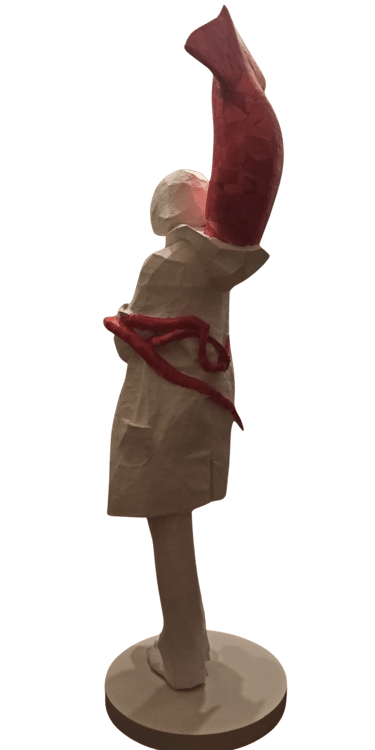
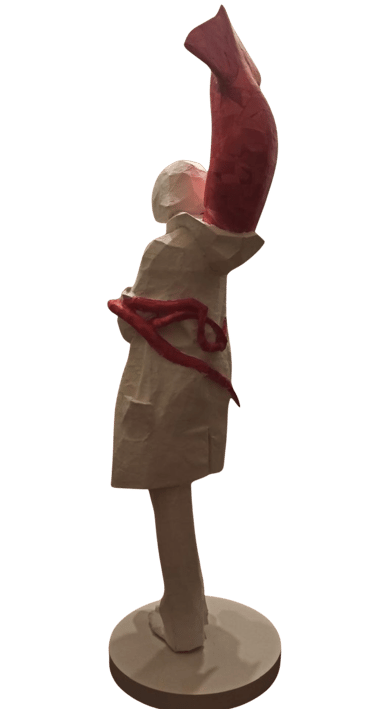
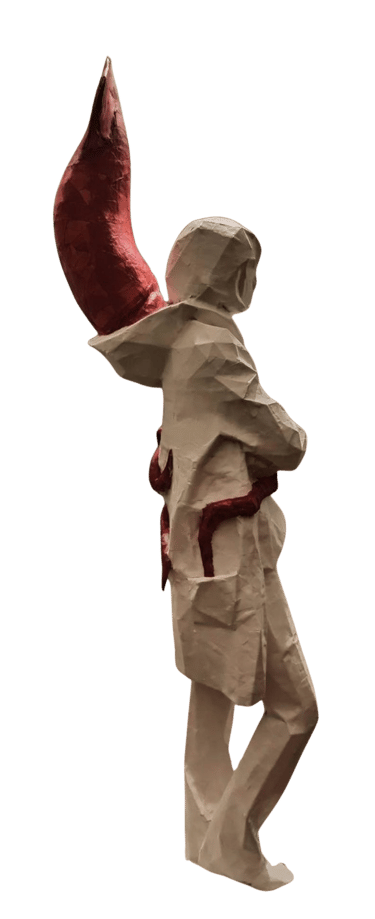
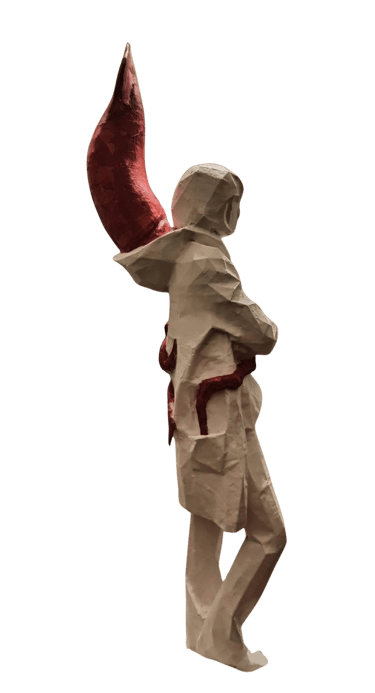
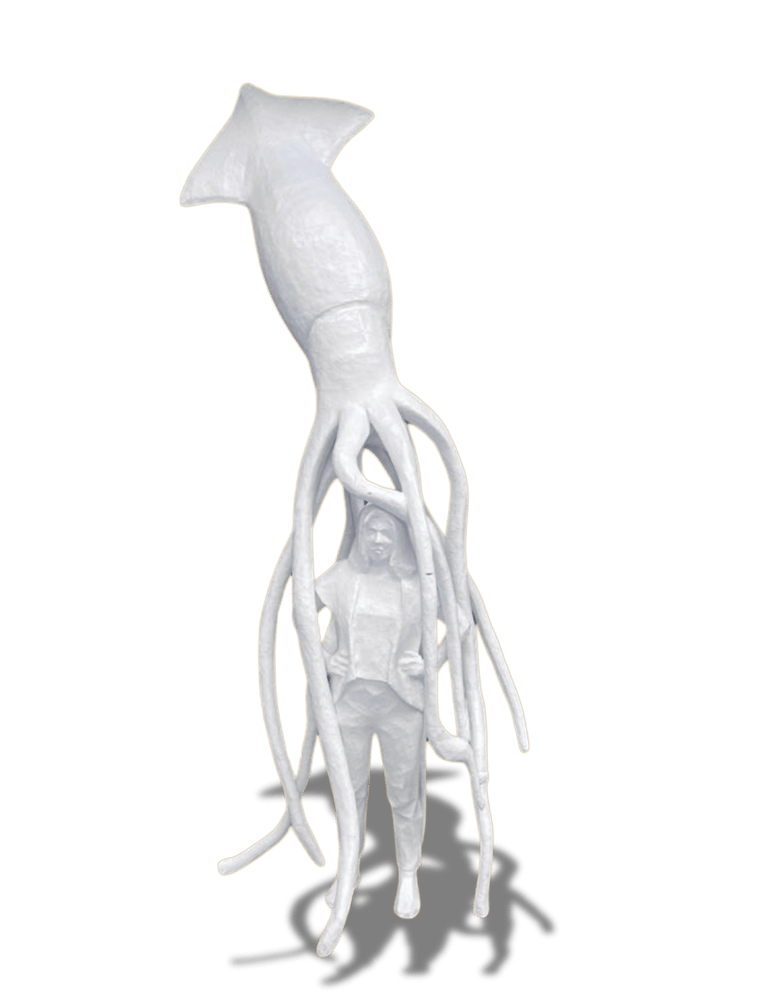
WHAT I CARRY INSIDE ME |PAPER |2023 |350*70*100 CM
These works begin from the idea that the body is not merely a visible form, but a site that carries, contains, and transforms. The figures walk, pause, or remain suspended; yet in every state, they coexist with something that grows from within and shapes them. This burden is not an externally imposed object. It is the bodily manifestation of suppressed memories, grief, habitual resilience, and inner states carried continuously over time.
Here, the body is not a surface but a threshold—a vessel and a shelter. What exists inside gradually seeps outward, rises from the head, settles onto the shoulders, and alters movement. The figures do not struggle against this weight, nor do they reject it. Rather than resistance, conflict, or dramatic rupture, the works propose a condition of coexistence. Remaining upright becomes possible not by releasing the burden, but by learning how to live with it.
Constructed from fragile materials, these forms suggest that strength emerges not from hardness, but from adaptation. When what is carried becomes visible, the body is no longer alone—yet it is not necessarily relieved. These works speak of a quiet continuity formed with what is not abandoned, and perhaps does not need to be.
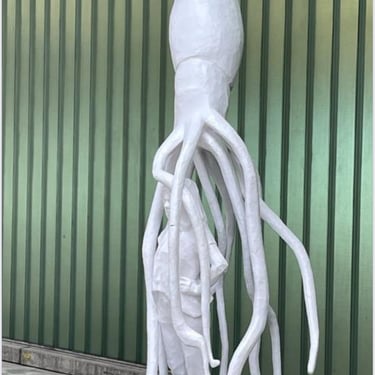
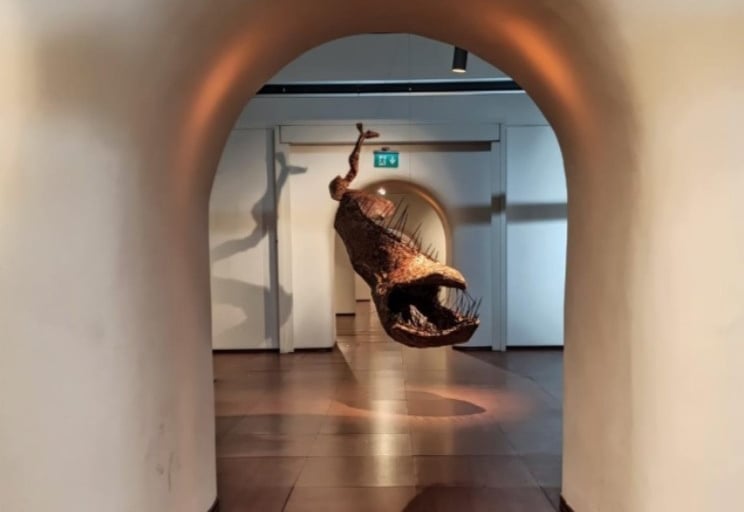
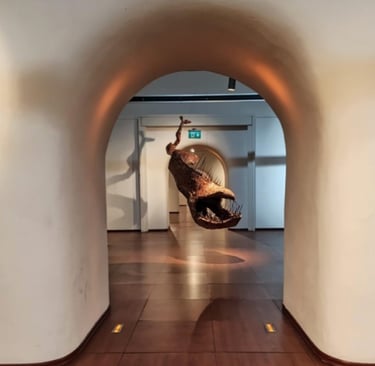
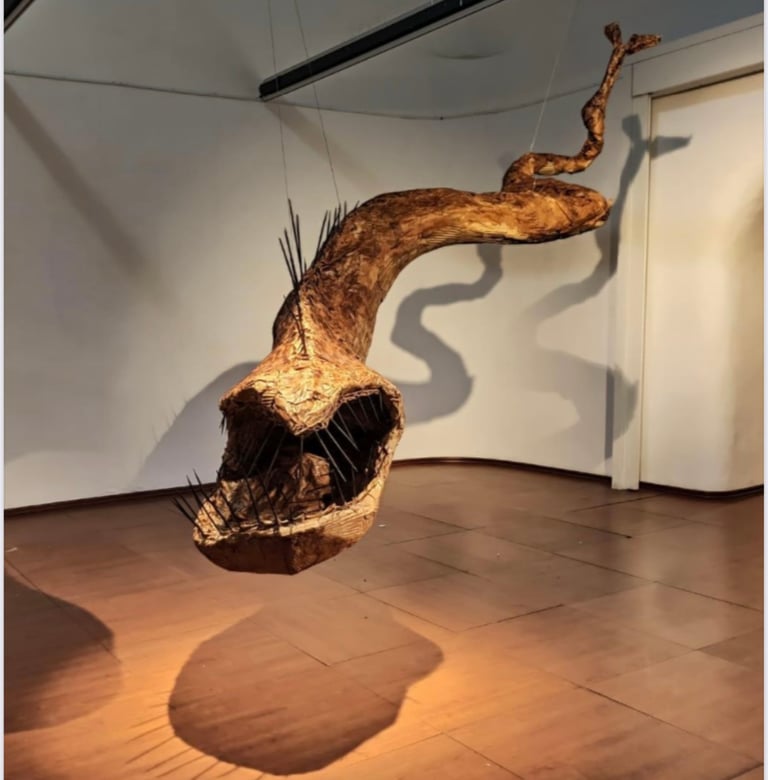
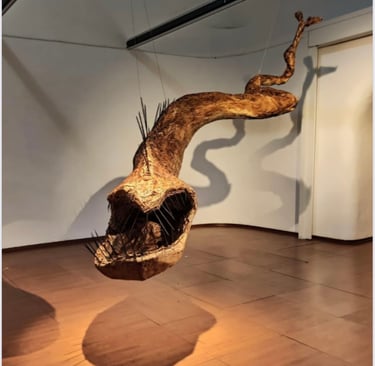
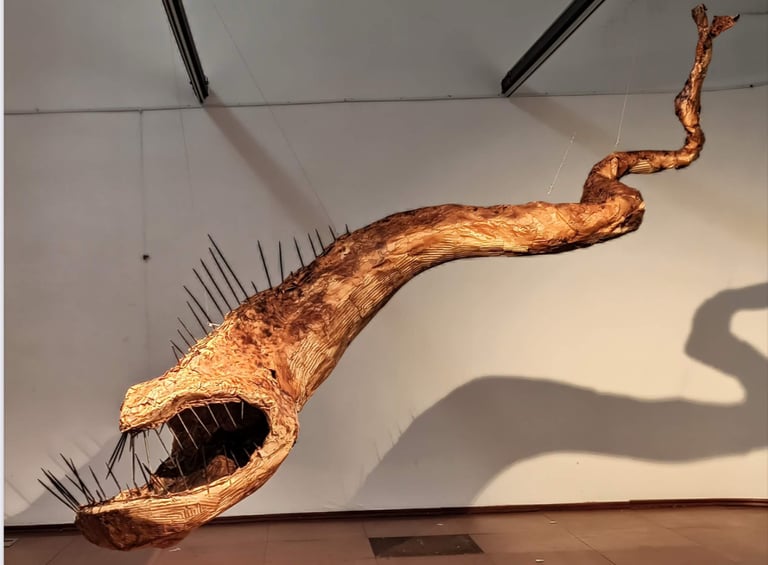
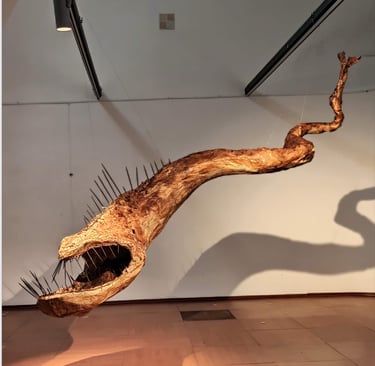
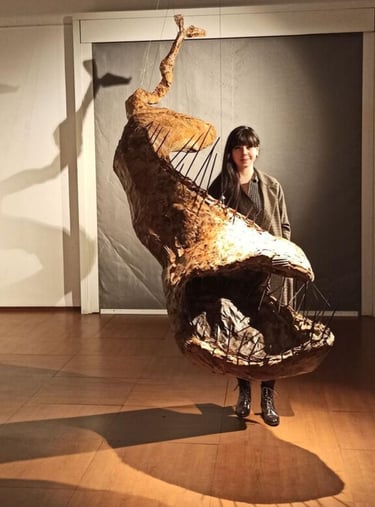
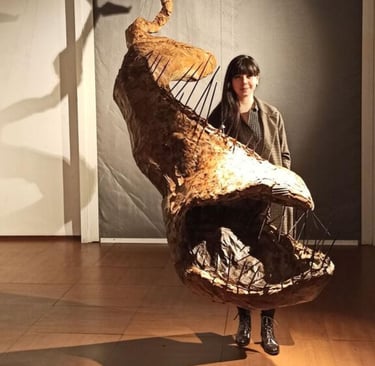
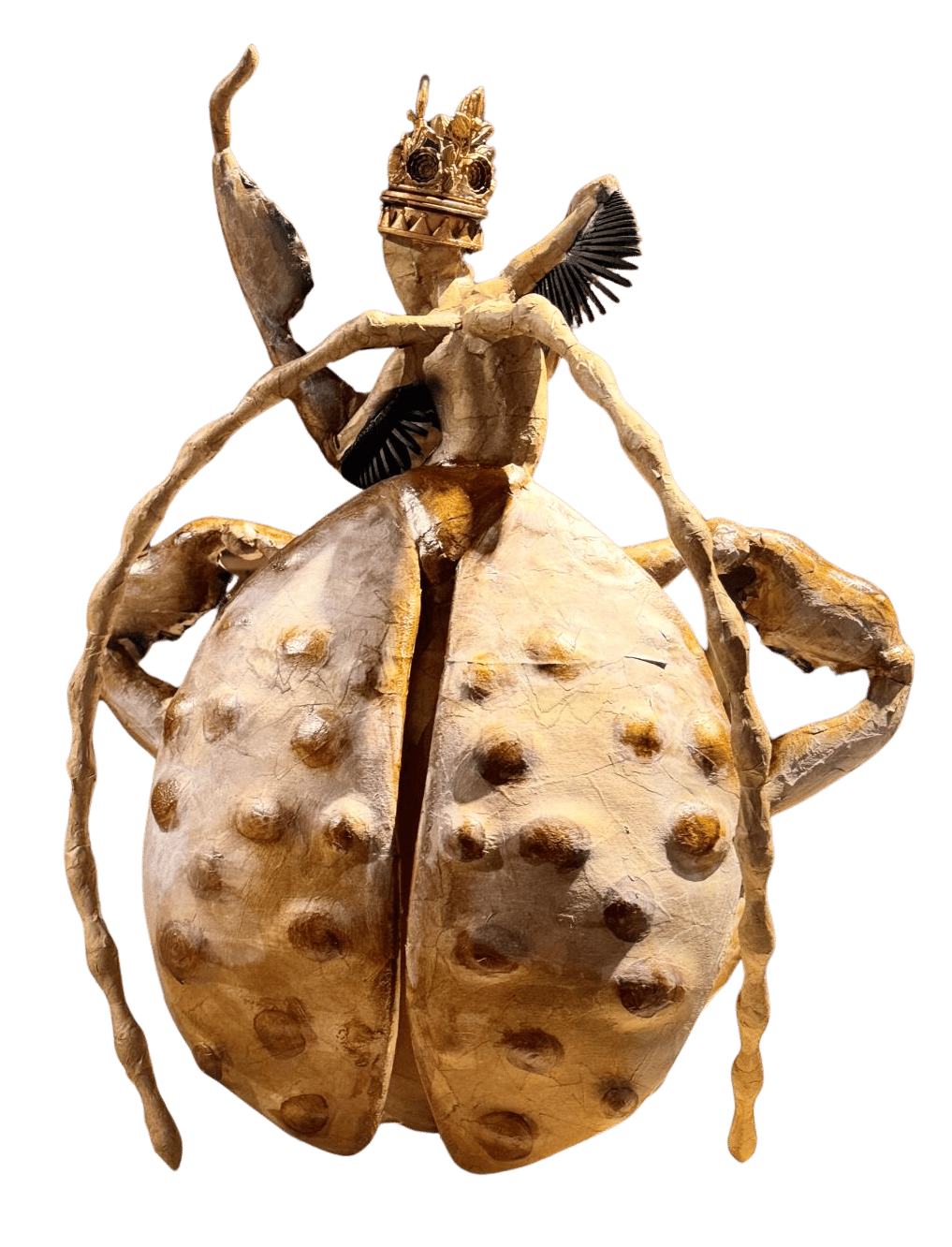
EGO is a bodily extension of the human impulse to place the self at the center.
It exists as a structure that grows by detaching from nature, becoming heavier as it feeds, and eventually burdening the very body that carries it. The sculpture approaches the construction of the self as a defense mechanism—an emptied core encased within a hardened shell.
Resembling an organic form, the structure evokes a presence that is both alive and threatening. The sharp protrusions along its surface symbolize the ego’s instinct to protect itself and the spiked distance it establishes against the outside world. Through its scale, the sculpture deliberately disrupts the viewer’s bodily perception; here, the ego is not only a mental construct but a physical force to be confronted.
The hollow interior reveals the paradox of the ego:
what appears strong, solid, and dominant from the outside is internally fragile and incomplete. This confrontation invites the viewer to recognize the ego’s dual nature—both protective and destructive. As the human becomes trapped within the self it has created, the sculpture translates this confinement into space and body.
EGO questions the point at which the act of self-construction shifts from protection to domination, reminding us how the expansion of the self, rather than liberating, can become a weight.
EGO |PAPER| 2015| 300*70*80 CM
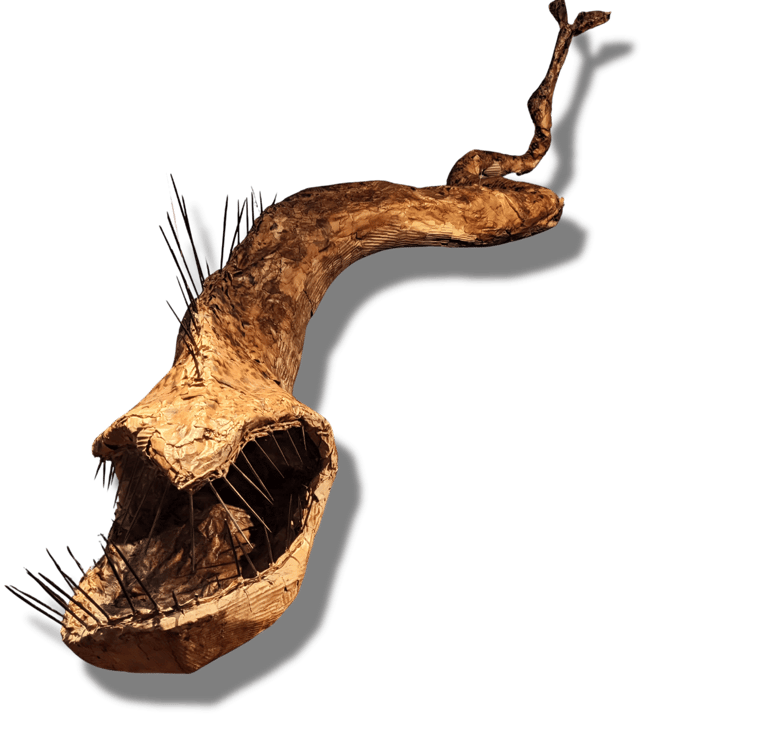
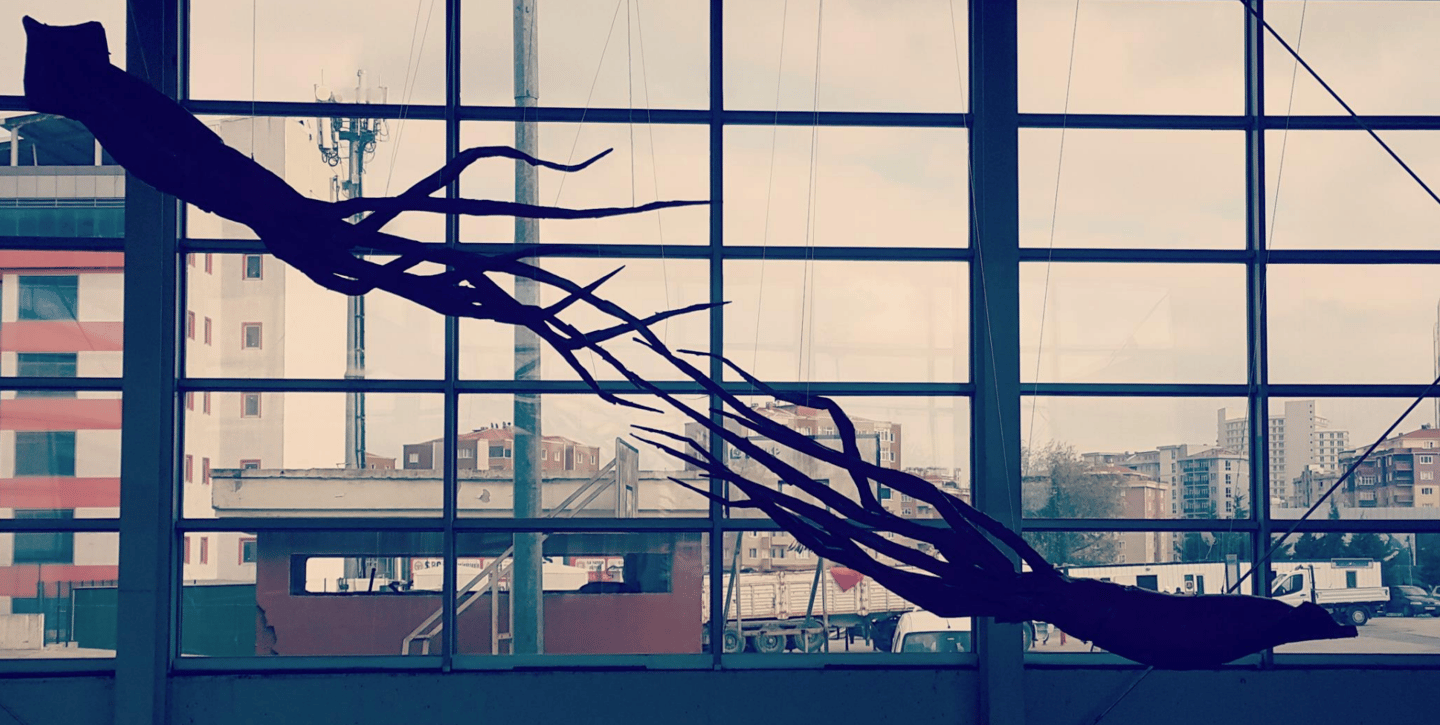
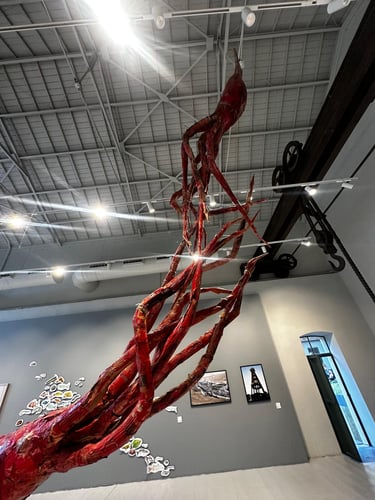
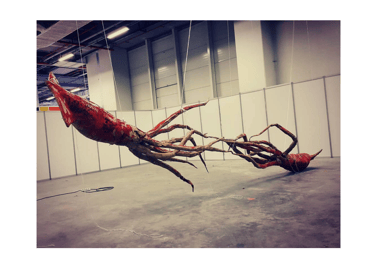
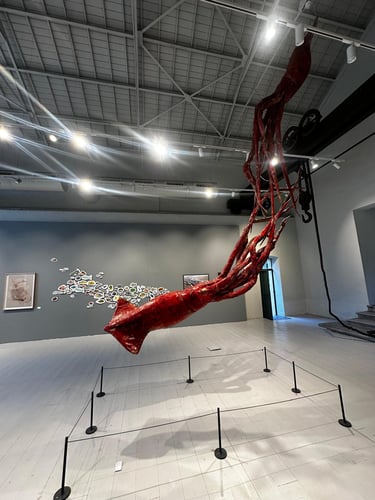
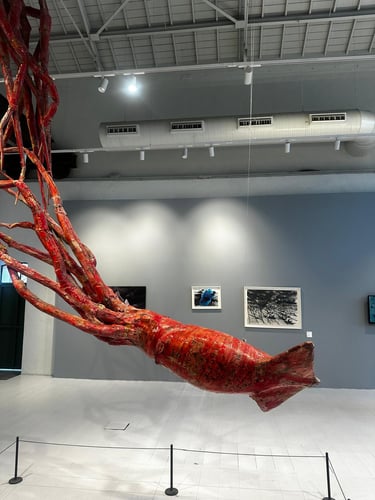
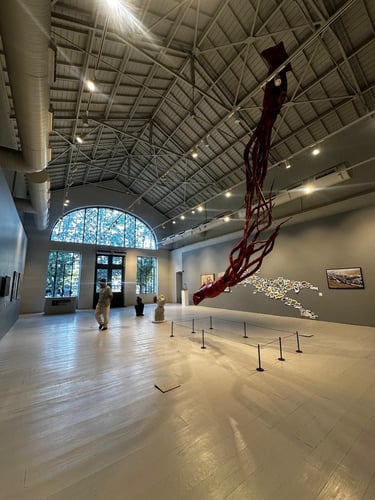
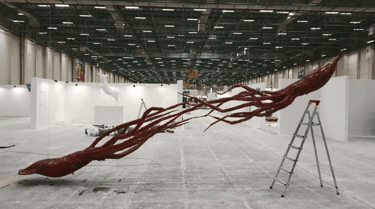
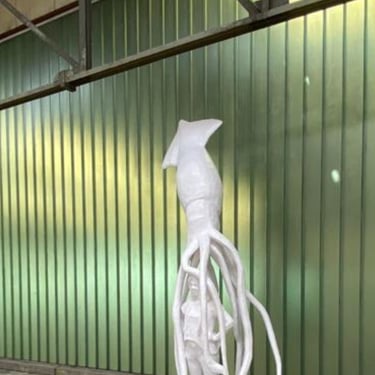
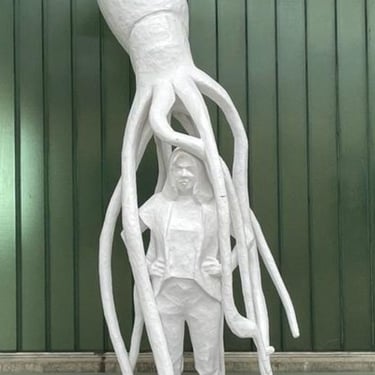
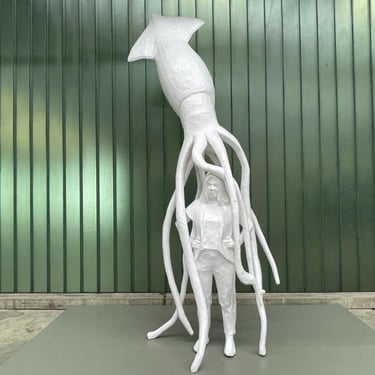
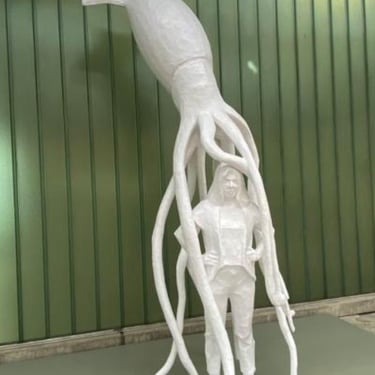
ENTAGLED SQUID | PAPER | 2016 | 800*50*75 CM
This work approaches the relationship between two forms through the concepts of flow, dissolution, and transition, moving beyond representation and depiction. The figures resist a fixed perception of the body; they stretch, fragment, and merge, suspending distinctions such as subject and object, inside and outside, self and other.
The ink discharge of the octopus—commonly understood as a defense mechanism—is conceptually inverted here and reinterpreted as a state of openness and contact. Rather than functioning as concealment or escape, the ink becomes a means of connection, inscription, and an irreversible encounter.
Movement within the work suggests a cyclical circulation rather than a linear union. The extension, withdrawal, and reorientation of the arms point to a redefinition of desire—not as possession, but as the capacity to coexist simultaneously. In this sense, mating is framed not as a physical act, but as a relational condition.
As the figures engage in this fluid exchange, space itself becomes secondary; the background dissolves while the act of contact emerges as the primary structure. The work thus renders visible not the boundaries of the body, but the dissolution of boundaries, inviting the viewer to reconsider intimacy through temporary alliances rather than fixed identities.
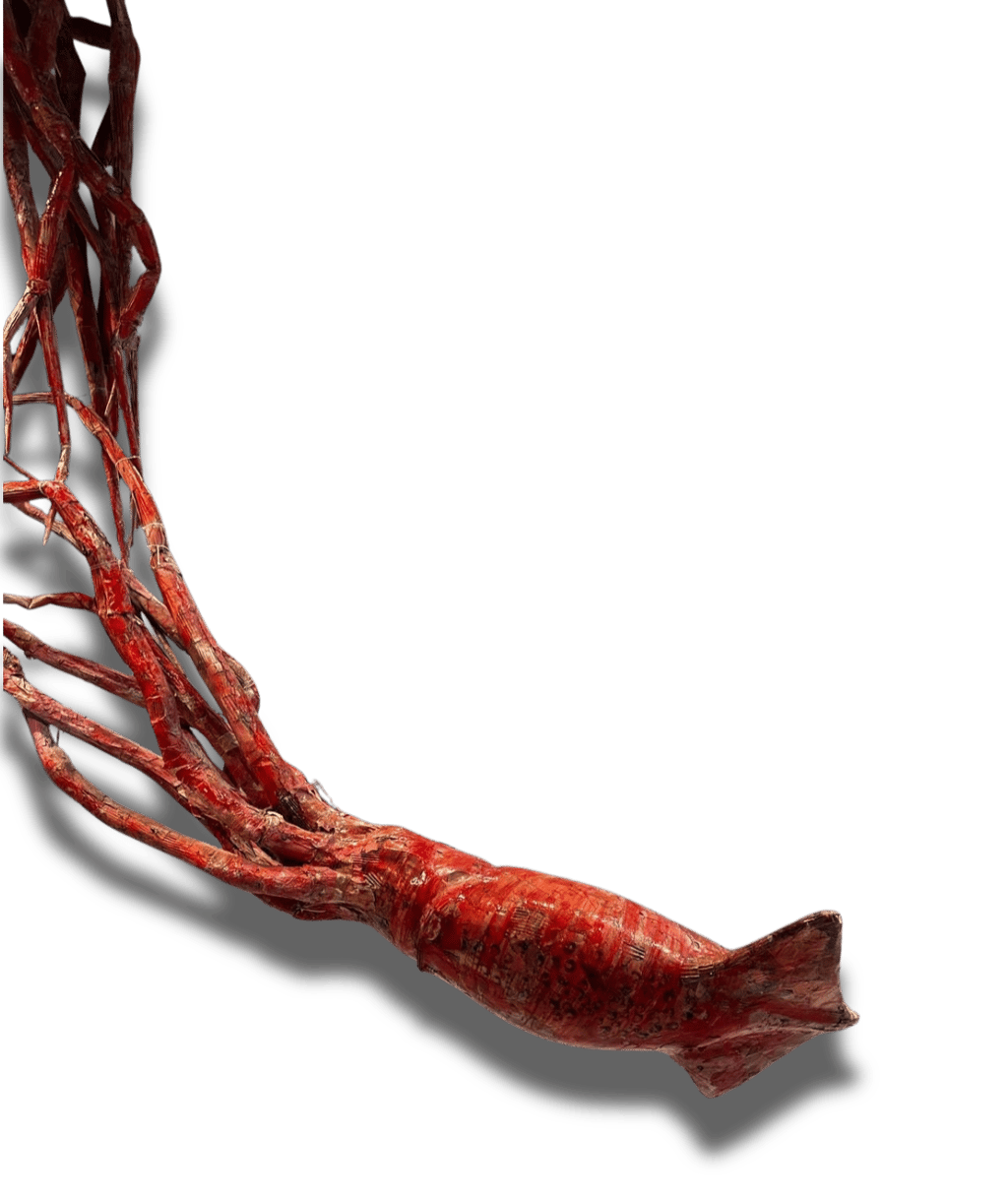
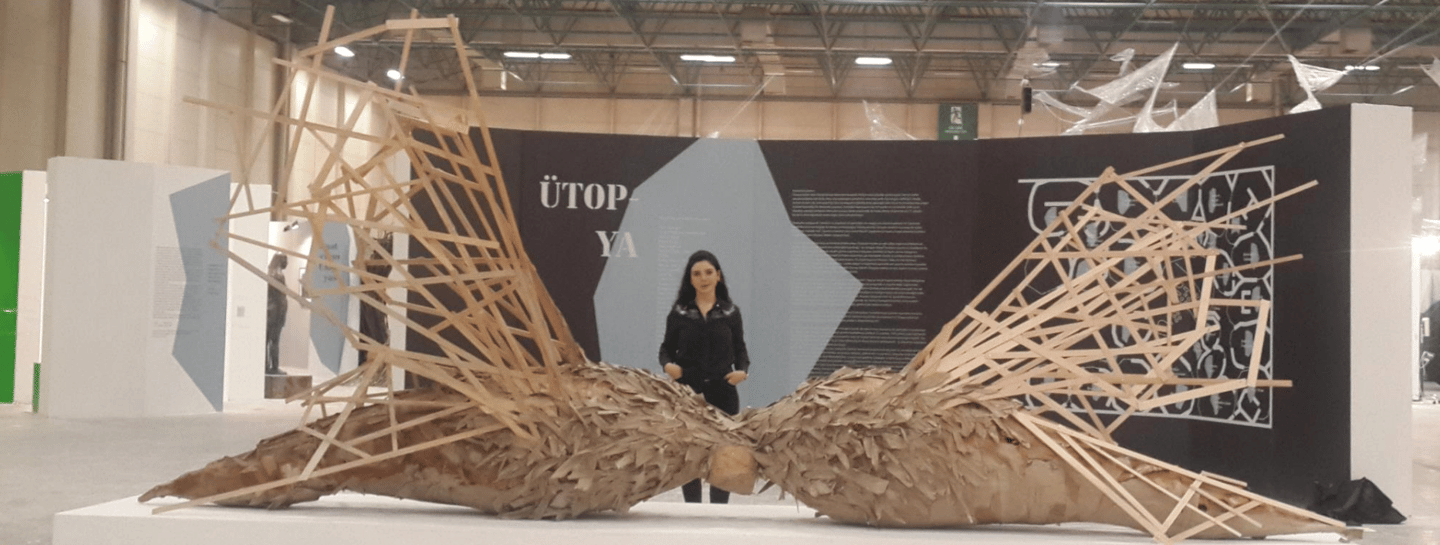
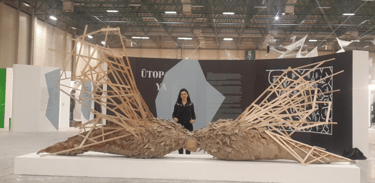
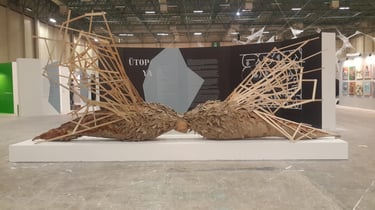
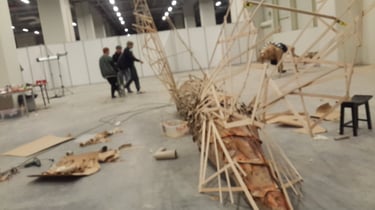
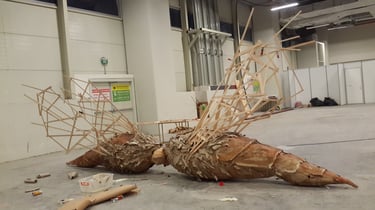
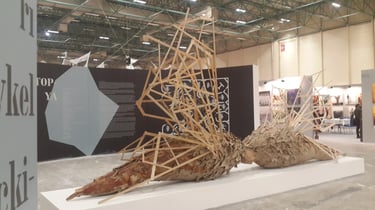
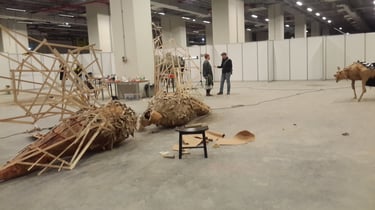
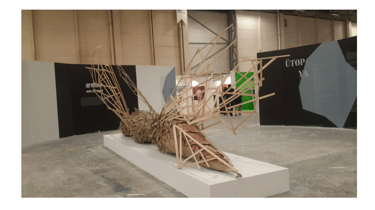
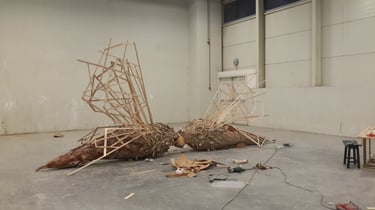
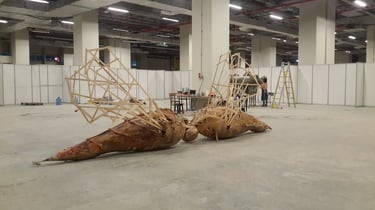
BUTTERFLY EFECKT |PAPER AND WOOD |2017 | 750*200*100 CM
This work reconsiders the concept of causality through the structure of the human mind.
The fusion of two butterflies within a single head represents the plural nature of thought and the non-linear dynamics of cognitive processes. Here, the butterflies are not treated as poetic metaphors, but as simultaneous and conflicting movements of mental production.
The head functions as the spatial equivalent of perception and decision-making mechanisms. The point of fusion marks a zone where thought generates micro-effects before extending into the external world. In this context, “effect” emerges not as spatial expansion, but as cognitive concentration.
The unfolding wings of the structure indicate a non-deterministic system. Each fragment of form carries the potential to produce unpredictable outcomes. The butterfly effect is thus associated less with chaotic natural phenomena and more with the internal organization of the human mind. Thought is approached not as a fixed center, but as a constantly branching, shifting, and self-reproducing network.
The merging of two butterflies within a single head destabilizes the cause–effect relationship. It becomes impossible to distinguish which thought is the trigger and which is the consequence. This indeterminacy constitutes the core structural principle of the work. The fragility and expansion of the form correspond to the uncontrollable and irreversible impacts of mental processes.
The Butterfly Effect is positioned as a cognitive model that investigates the effects produced by thought before it transforms into action, materialized through sculptural form.
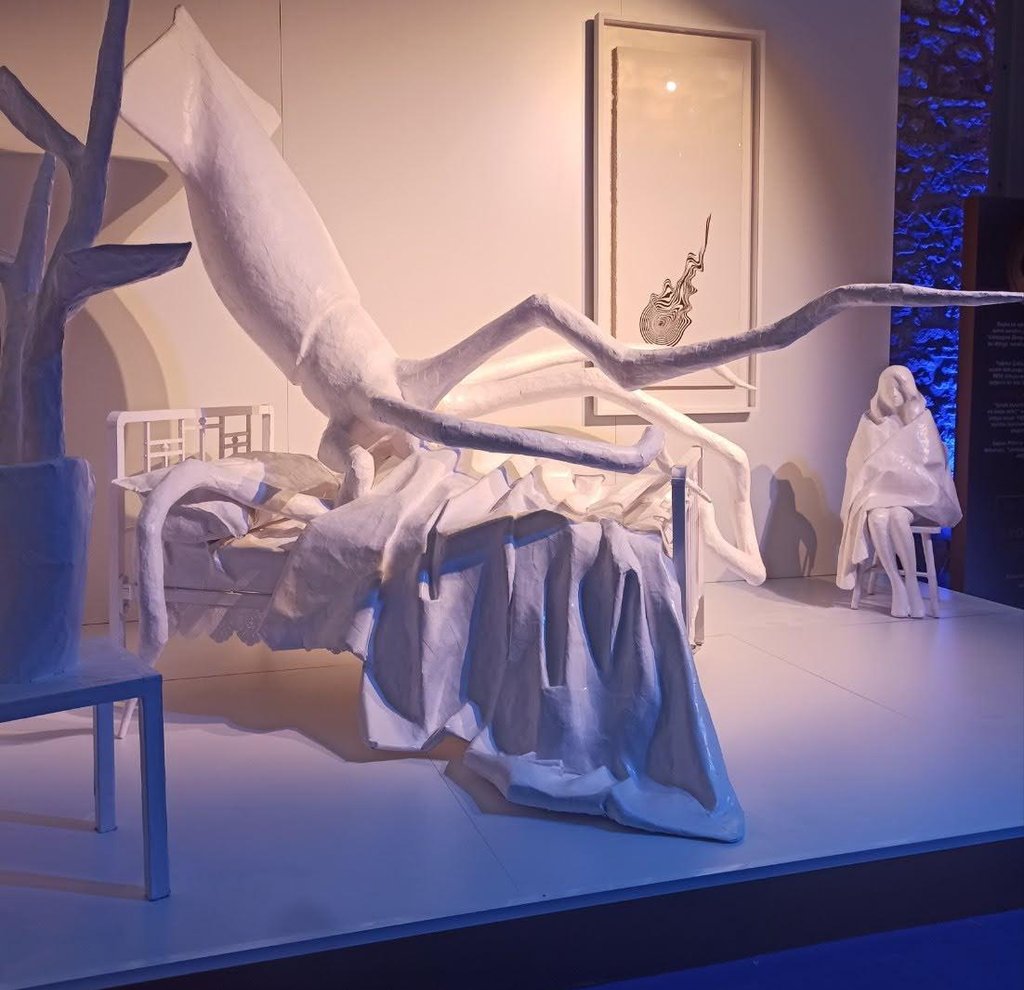
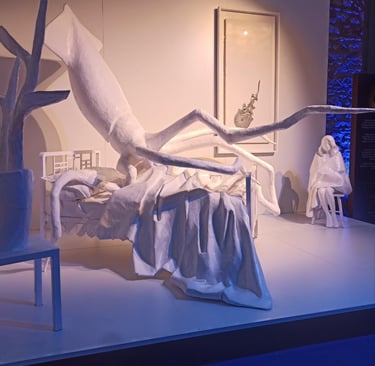
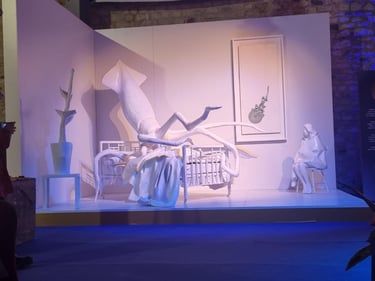
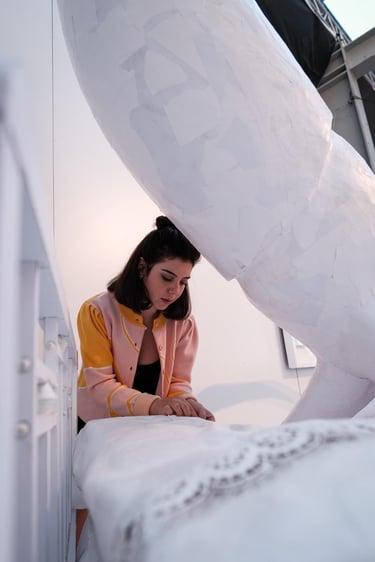
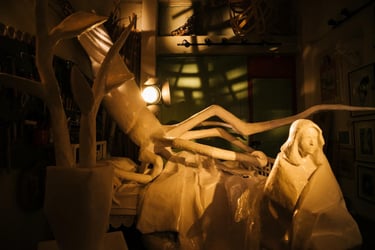
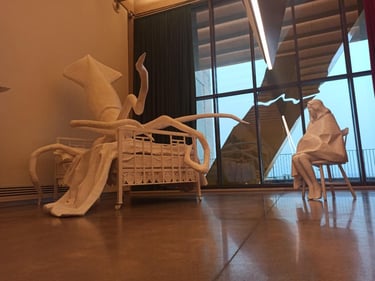
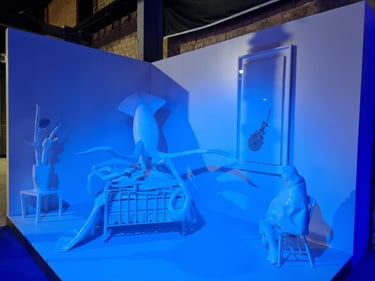
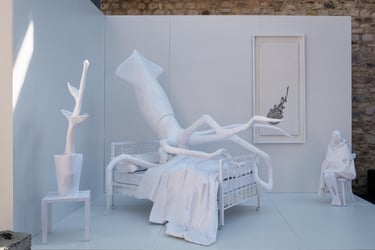
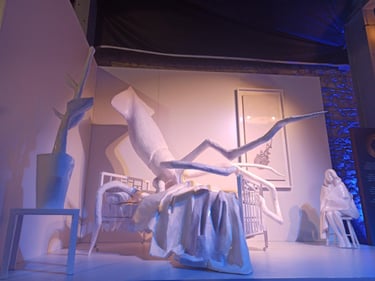
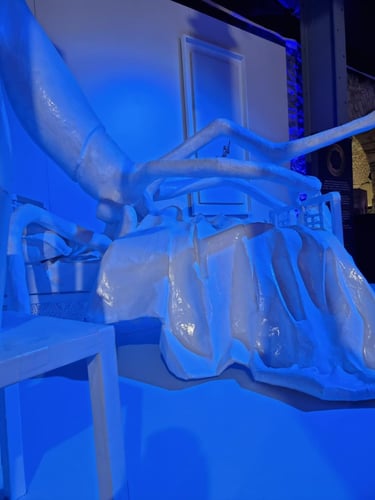
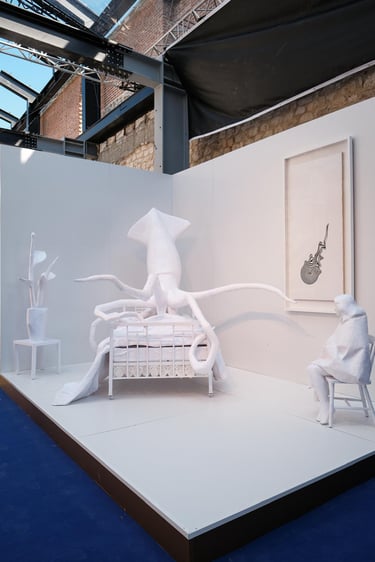
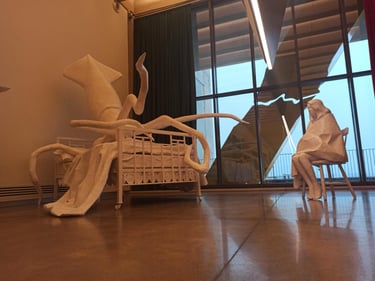
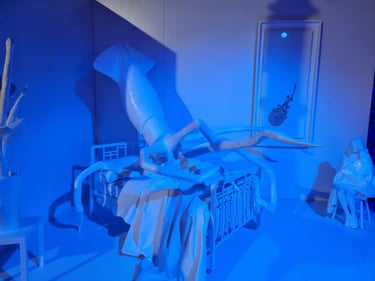
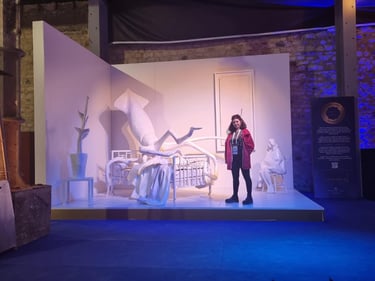
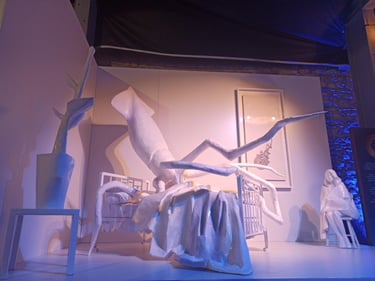
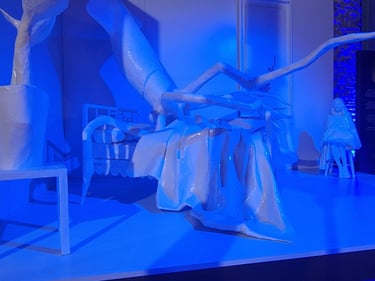
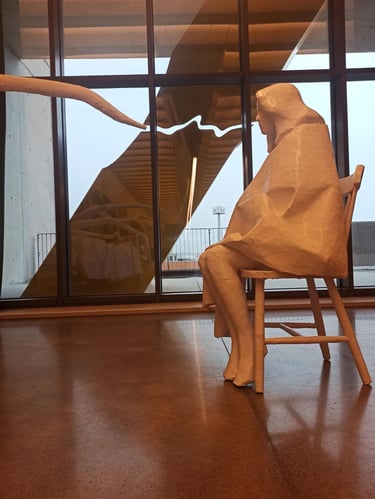
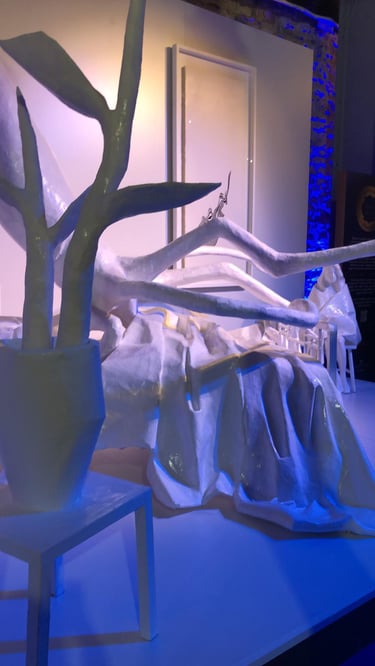
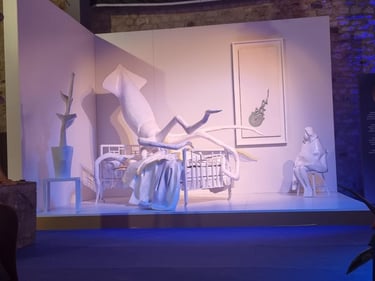
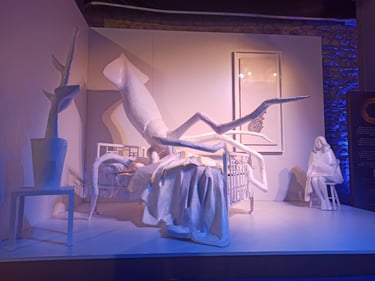
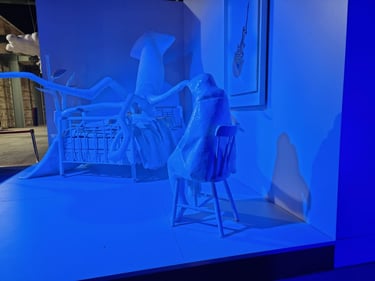
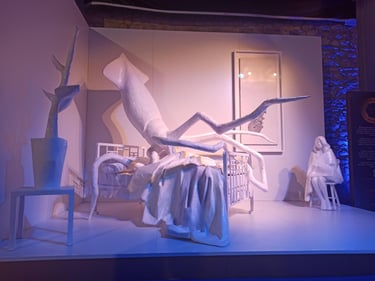
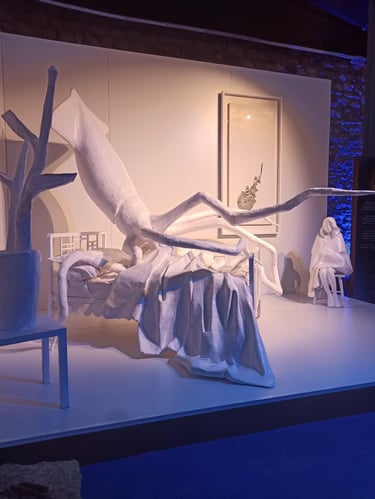
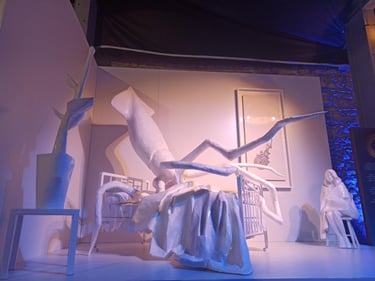
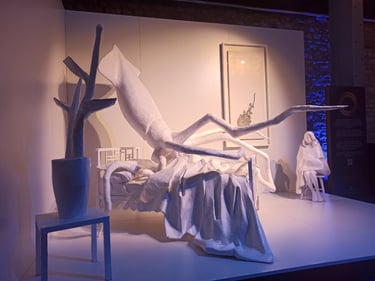
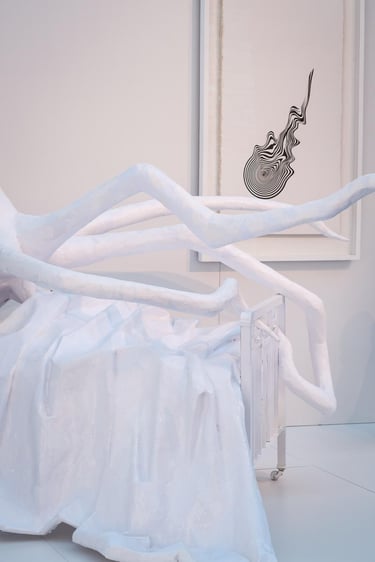
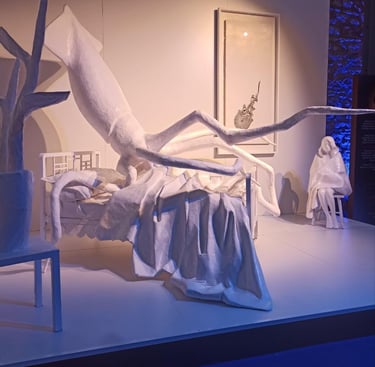
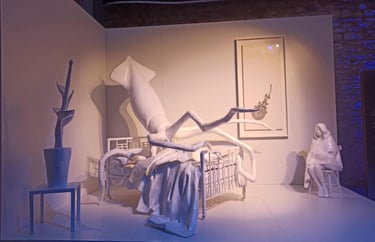
REM SLEEP |PAPER |2023| INSTALLATION
From a series in which the Squid occupies a central role
REM sleep is the most paradoxical stage of sleep. While the body becomes almost entirely immobile, the mind reaches its highest level of activity. This phase can be understood as a threshold where the boundaries between consciousness and the unconscious, reality and fiction, begin to dissolve. Dreams emerge during this stage, and brain waves closely resemble those of wakefulness. REM is less a state of rest than one of confrontation.
This work emerges precisely from this liminal condition.
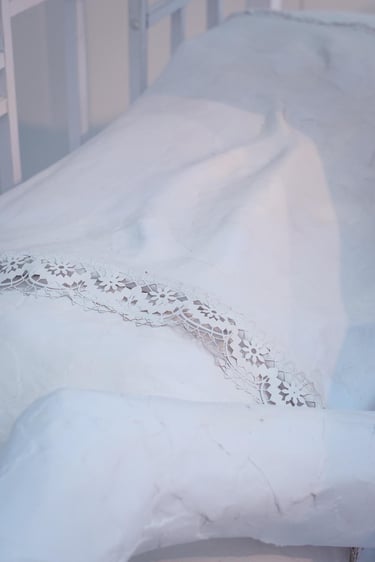
I constructed an entirely white room. Here, whiteness does not signify purity or emptiness, but rather sterilization, suppression, and erasure. The space recalls a bedroom — a place traditionally associated with safety and intimacy — yet its order has been disrupted and its functions displaced. For this reason, the room feels less like a dream and more like a nightmare.
The bed is no longer a site of rest, but of occupation. Lying upon it is a squid, whose expansive, shape-shifting body functions as both a threat and a witness. Through its ability to spread, adapt, and infiltrate its surroundings, the squid becomes a metaphor for defense mechanisms, invisibility, survival, and trace-making. Ink, in this context, signifies both concealment and the unavoidable evidence of presence.
A single flower appears in the space, fragile yet persistent. Contained within a pot, it points to a domesticated and controlled version of nature. The flower lives, but it is not free.
The female figure is not where she is expected to be. Instead of the bed, she sits on a chair. This displacement gestures toward the removal of the body and identity from spaces that should offer rest and protection. The body remains awake where it should rest; the space meant to be safe becomes unstable. The woman exists in suspension — neither fully active nor fully passive — embodying a state of unresolved consciousness.
This installation functions as a three-dimensional, allegorical projection of the social structures within which I exist. It reflects a world in which social, cultural, and political systems infiltrate even the most intimate spaces of individual life; where the private is increasingly rendered public, and both body and mind are subjected to continuous control and surveillance.
The work poses a series of questions to the viewer:
To what extent do we truly belong to ourselves within the structures we inhabit?
Are the spaces we define as “safe” genuinely ours, or are they merely temporary illusions?
How do oppression, violence, political intervention, and global destruction penetrate the most internal realms of human existence?
REM Sleep marks the moment when sleep ceases to be restorative and becomes a site of unavoidable awareness. The work invites viewers to reconsider the idea of safety and to recognize how vulnerable we remain, even in moments we assume ourselves to be awake.
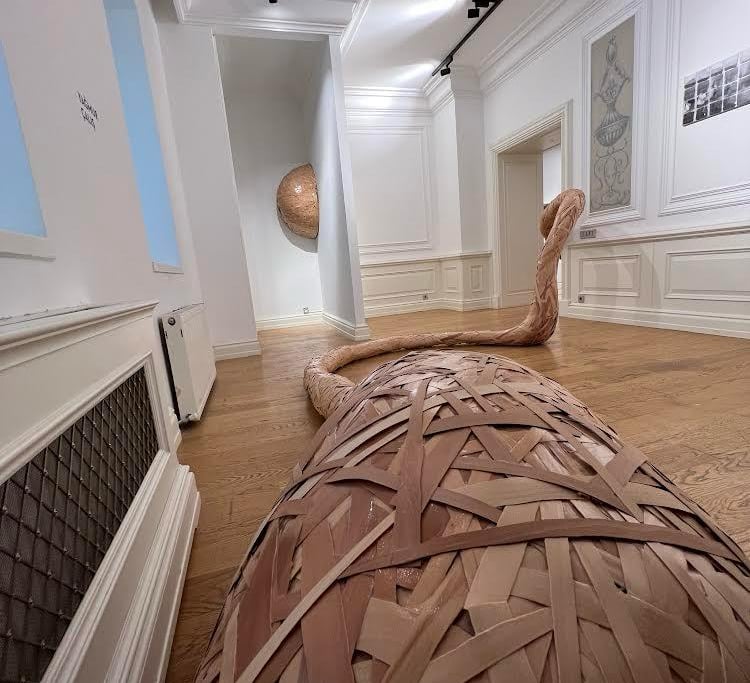
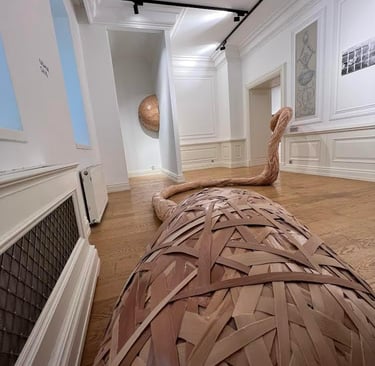
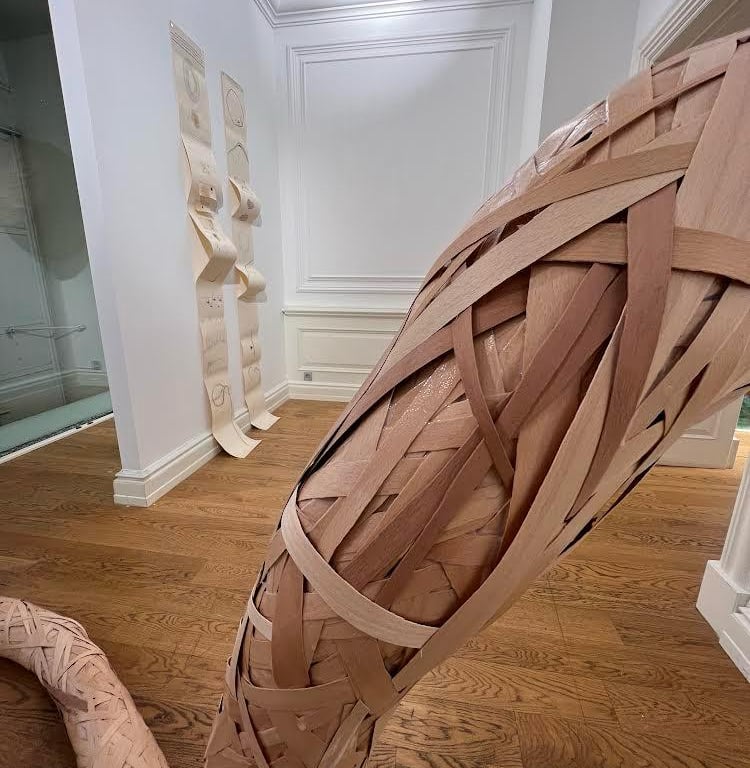
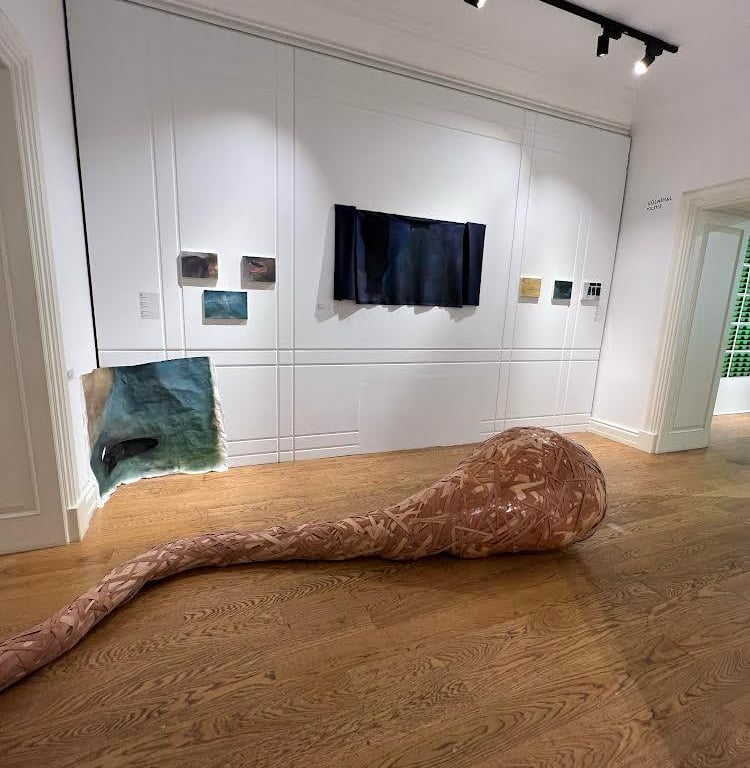
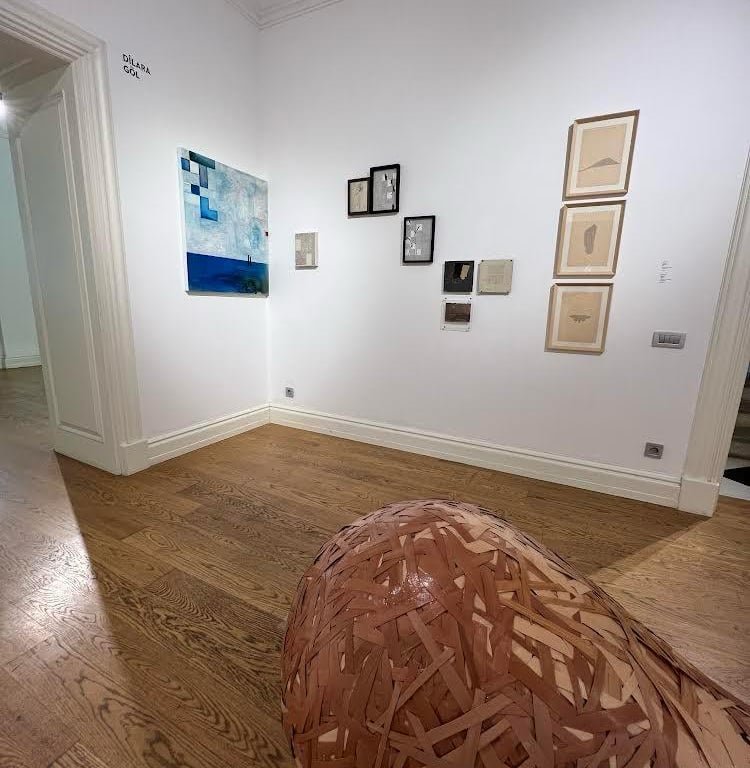
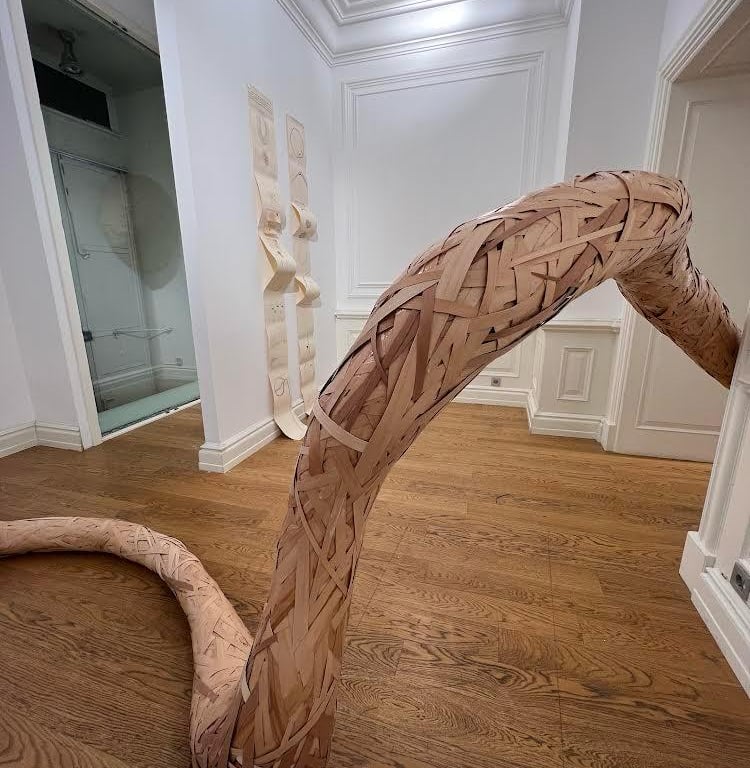
Metastasis is a word of Greek origin, meaning displacement or transition into another context. This concept occupies a central place in both my personal and artistic practice.
My engagement with weaving-based works stems from the reinterpretation of a profession inherited from my family roots through my identity as an artist. Basket weaving, rather than remaining a purely functional craft, evolves within my productions—expanding beyond the basket form, spreading into space, integrating with its surroundings, and at times transforming into invasive, dominant structures.
By detaching a practice on the verge of disappearance from its original historical and functional context, I reframe it within a new conceptual field shaped by my own artistic perspective and methods of production. Through sharing this process with the viewer, I aim to create a space for both personal memory and collective rethinking.
METATASIS | WOOD | 2021 | INSTALLATION
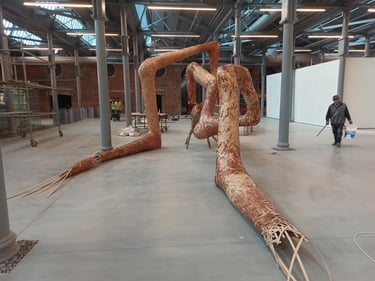
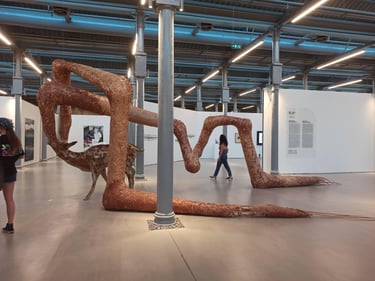
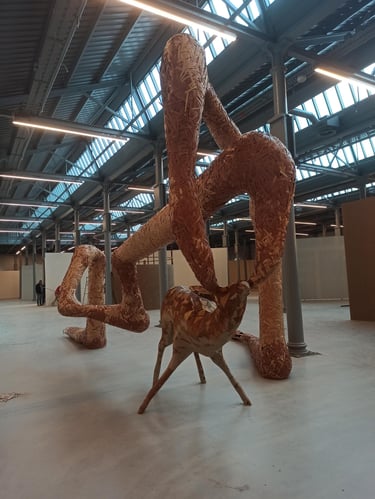
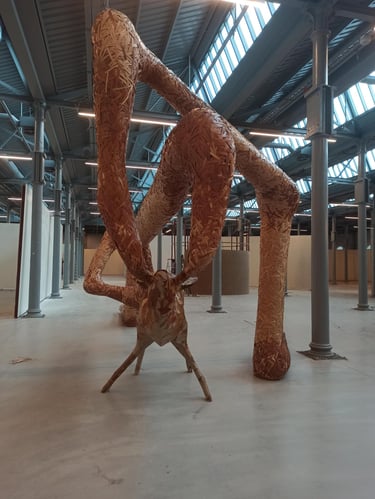
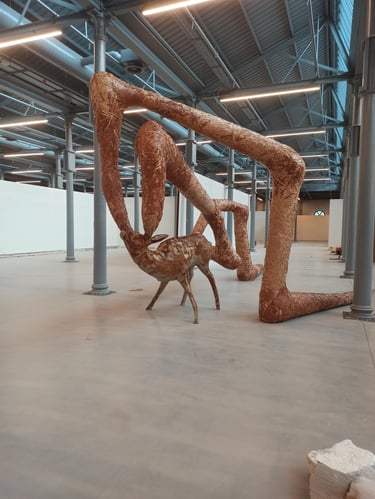
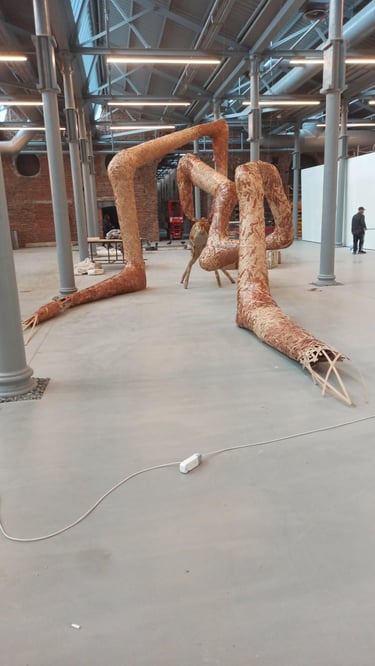
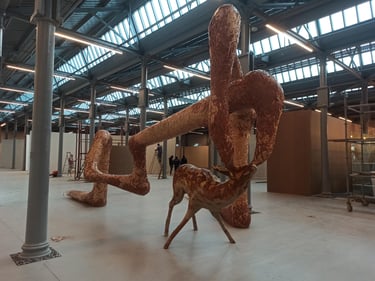
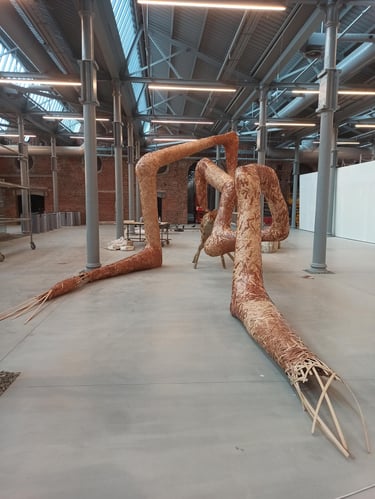
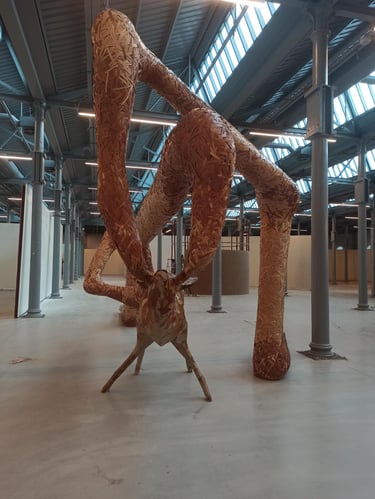
INVASION 2| PAPER AND WOOD | 2023 | INTALLATION